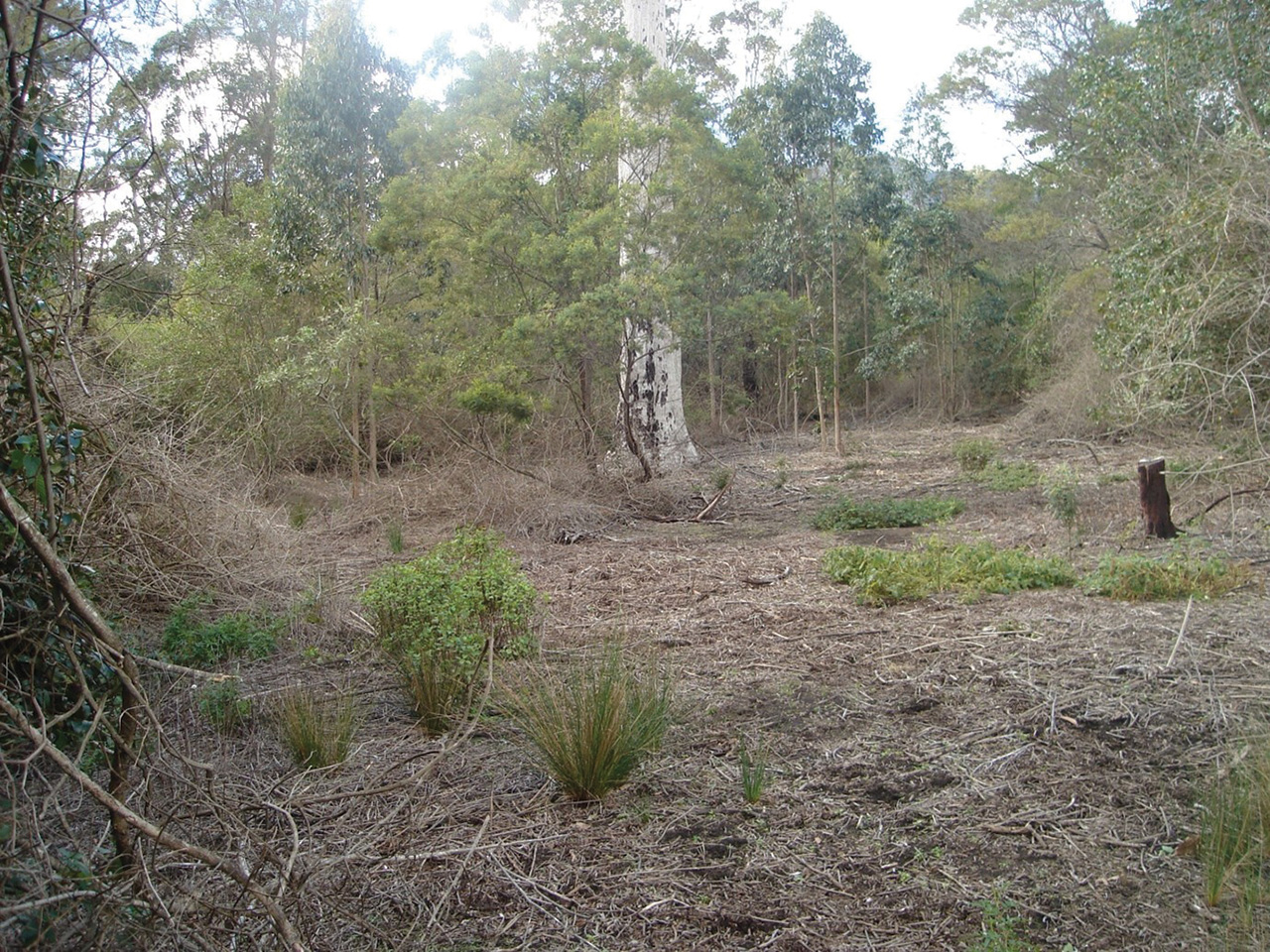
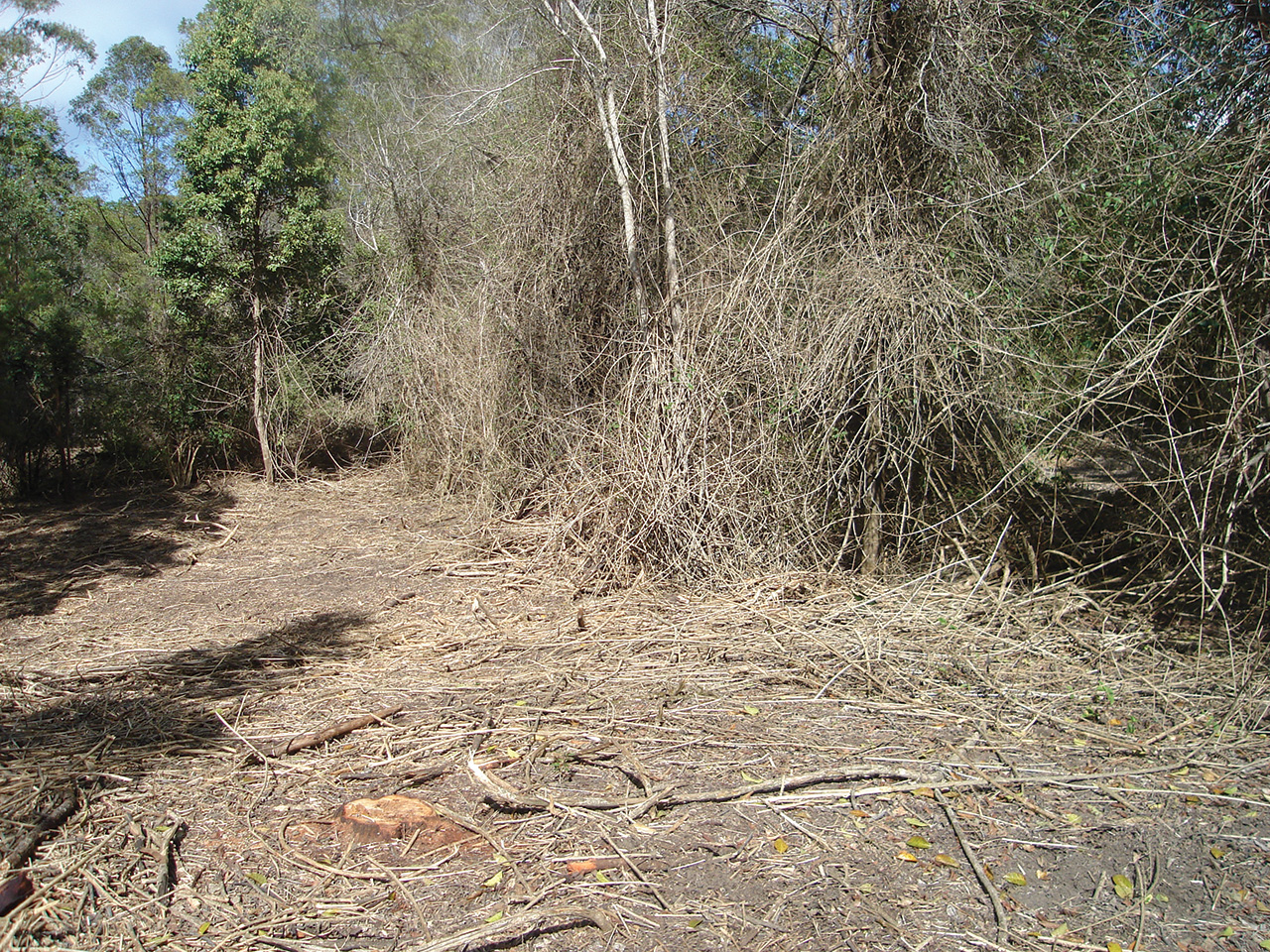
Twenty-two years ago, while looking for land, we came across a very weedy property. It had beautiful views, but lantana had formed thick walls, climbing up wattle trees and spreading everywhere. We macheted our way through the tall lantana to reach a creek bed that was dry as it was the peak of the Millennium Drought. The place had potential, but it would require a great deal of work.
We continued exploring and came across an area where lantana stretched as far as the eye could see. Seeing this sea of lantana nearly turned us off buying the entire block. However, the sweeping mountain views and glimpses of fine trees among the lantana convinced us to go ahead with the purchase.
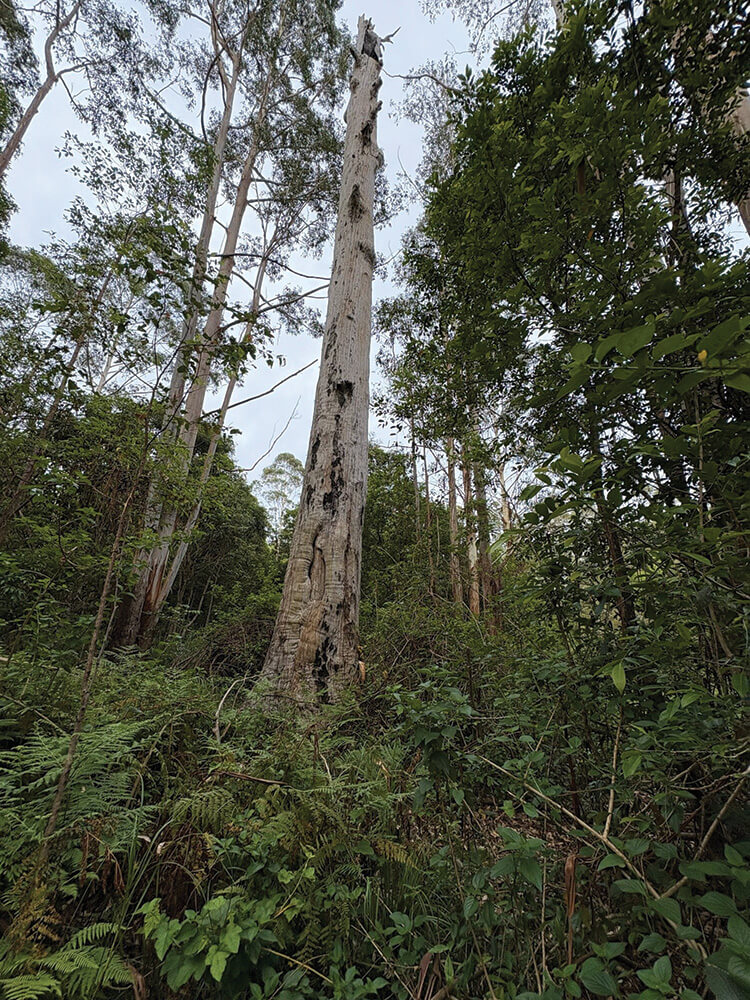
Dead trees were such an important habitat feature, so we wanted to protect them. We decided to name each tree after artists. One dead tree stood alone in the area where lantana extended in every direction. We named this tree Nolan.
Fast forward 20 years later and that paddock that nearly turned us off the place is now tall with eucalypts and the dead standing tree called Nolan ended up having a Greater Glider living in it! The Greater Glider was spotted as part of an Australian Government funded National Environmental Science Program (NESP) project that we are participating in. The NESP project is a three-year research collaboration between James Cook University, University of Tasmania and four Local Governments in SEQ – Logan, Gold Coast, Moreton Bay, and our local council, Scenic Rim Regional Council. You can find out more about it on the NESP Resilient Landscapes Hub website.
To explain how our involvement in this project came about, it helps to provide some background information. One night, while sitting around the campfire, we heard the strangest call. We had no idea what it was. Was it a strange flying fox or something we did not recognise, like a fox or a quoll? No.
Later, on a Queensland Glider Network Facebook page we heard the call again and realised that it could be the call of the Yellow-bellied Glider. We mentioned this to our Land for Wildlife Officer, Catherine Madden, and she agreed that we might have these large but elusive gliders.
Catherine organised for our property to be visited as part of the NESP project by James Cook University researchers, Michael Tervo and Maaike Hofman. They confirmed that our property had potential as habitat for Yellow-bellied and Greater Gliders. We were so excited.
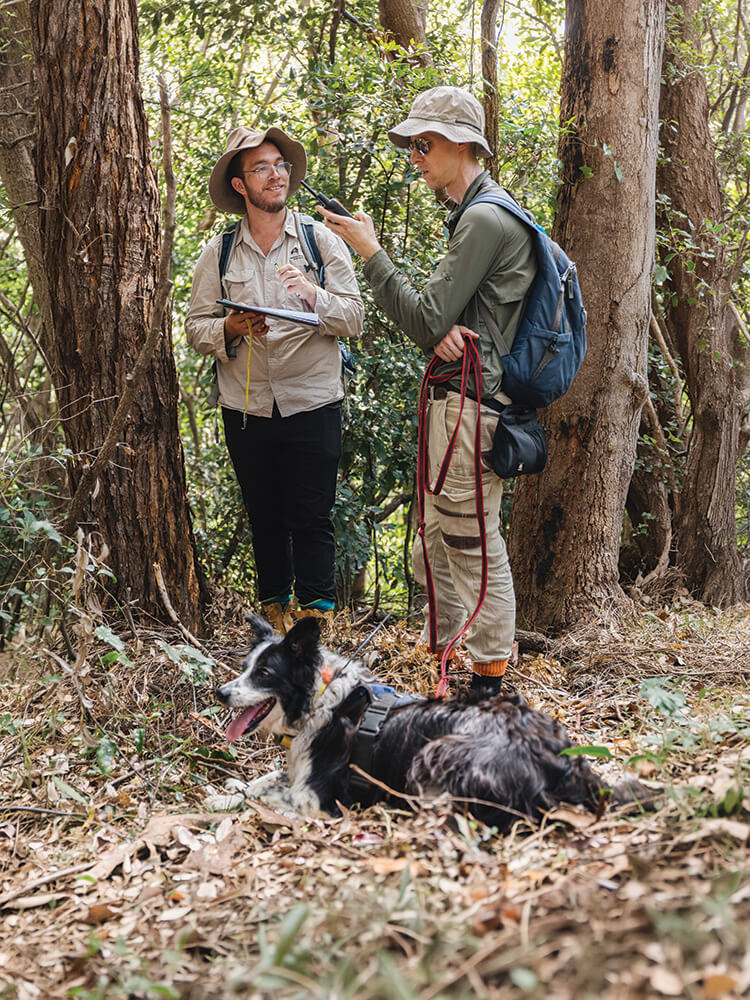
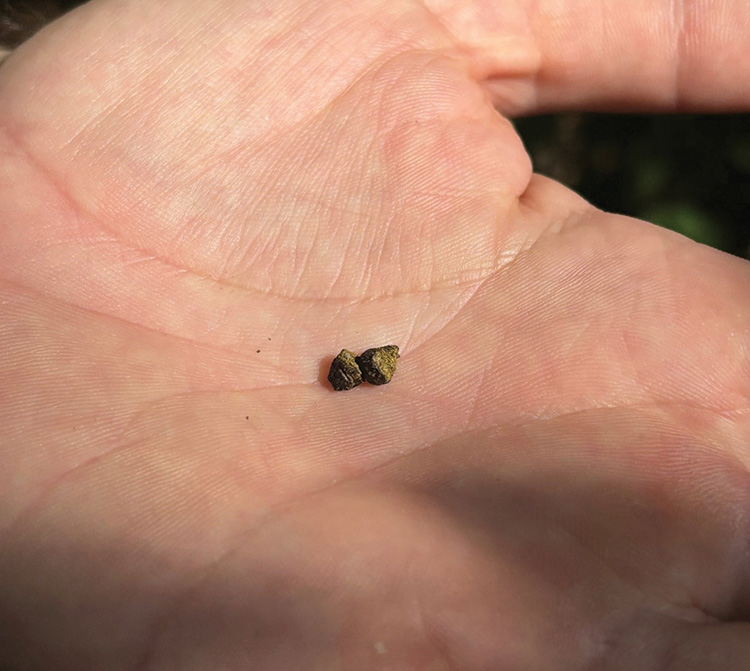
They then organised a visit from a Greater Glider detection dog, Austin, and his handler, Marcus, along with Michael Tervo and Greg Tasney from the Conservation Partnerships Team at Scenic Rim Regional Council. Austin sniffed around the base of the old dead standing tree, Nolan, and indicated that there was a Greater Glider scat present. It was tiny, and we would never have found it among the leaves without Austin and Marcus. The scat was only about 5mm in size. Koala scat was also found.
A spotlighting night was organised with Greg Tasney and Josh Bowell to look for Yellow-bellied Gliders. Sadly, Michael could not attend due to other commitments. Greg is a walking encyclopedia of plant knowledge, and he showed us how to take better photos for identification on iNaturalist. His tip was to include my finger in the picture, which allowed the phone to focus closely on the leaves, and to take multiple photos. We waited till it was dark and then started spotlighting.
Greg and Josh showed us an interesting technique called spotlighting where you sweep the torch across the trees to look for eyeshine. Most mammals and nocturnal birds have distinctive eyeshine which will be obvious in the torchlight. Greg quickly spotted a Greater Glider munching on leaves in Nolan just near the hollow. It remained quite relaxed while we tried to get a better angle for a photo, with Josh using his enormous zoom lens.
We continued walking and spotlighting and saw some eyeshine, but no, that was a huntsman spider. It became clear that we were with very skilled scientists and we would not have spotted any gliders without them. As we walked along, Josh played the Yellow-bellied Glider call. Suddenly, he told us he had heard a reply. We stood quietly, listening and watching, but no luck.
We walked a little further, and Josh was confident he knew which tree the glider was in. We looked at the tree from different angles but still had no luck spotting it. The Blue Gum was in bloom and the glider must have been snacking on the nectar in the blossoms.
Suddenly, Josh confirmed that he had seen it, and we managed to get a photo as well. If you have ever tried bird photography with a long lens, imagine looking up into the tallest tree and zooming in on a glider in the dark. Josh was very skilled and captured a great photo.
Bush regeneration is hard work, as every Land for Wildlife member would know. We are excited that, within a relatively short period of time, the number of plant and animal species on our once almost-entirely weedy property, has expanded rapidly. Our property can now support endangered species such as the Greater Glider, Yellow-bellied Glider and Koalas.
Tips:
- Learn the Yellow-bellied Glider call in case you hear it.
- Keep and protect any precious dead trees and hollows. Clear the lantana around them to reduce the risk of fire. Naming them helps highlight their significance.
- iNaturalist is easier to use for amateurs than you might think. The AI
suggests an identification based on the photo you upload, and a person then confirms it. - Jump at any chance to connect with amazing scientists and Land for Wildlife Officers.
Photo at top: This Coastal Carpet Python was quite content wrapped around the washing line on Donna and Trevor Greaves’ Land for Wildlife property at Coominya earlier this year. It was a stunning yellow colour.
Article by Carolyn and Stephen
Land for Wildlife members
Scenic Rim Region