
One of the rewards of caring for a Land for Wildlife property is watching the wildlife return. First, big birds like magpies and kookaburras arrived and then as cover grew, smaller forest birds such as honeyeaters moved in. Marsupials started to arrive – wallabies, kangaroos, bandicoots and gliders. We responded by adding nesting boxes. Recording what we saw became a focus and it showed the progress we were making. As we learnt about butterflies, our plantings changed to include species preferred by Lepidoptera. We learnt to look and we noticed seasonal changes such as migratory species and breeding behaviours.
But what were those swift moving, elegant insects? Closer encounters revealed a variety of colours, shapes, wing movements and behaviours. We had discovered the insect order Odonata. Known as ‘odonates’, it includes dragonflies and damselflies. But not all odonates were the same. Some were red. Some were blue. A sudden awareness of these majestic insects quickly turned into a passion for us.
Our first encounter was a squadron of fluttering and floating yellow and black dragonflies hovering above a large fig tree. With lots of patience, a half decent photograph and some researching, our first Graphic Flutterers were bagged. So, the journey began and we started to look. But what were we looking for?
Dragonfly or Damselfly?
The Queensland Museum literature tells us that there are 115 species of dragonfly and damselfly in south-east Queensland.
The Queensland Naturalists’ Club has produced an excellent guide called Brisbane’s Common Odonata that is available free from their website. In the guide they list some features to help distinguish dragonfly from damselfly.
Dragonflies:
- Are usually larger and more robust than damselflies.
- Fly more directly, rather than flutter like damselflies.
- Hold their wings flat while perching, while damselflies hold their wings closed above their bodies.
- Have hindwings of a different shape than forewings, whereas damselflies wings are very similar.
- Have eyes that are much closer together (sometimes even touching), while damselflies’ eyes are usually clearly separated.
Of course, there are always exceptions to the rules.
Anatomy
Like all insects, odonates have three body parts – head, thorax and abdomen. The head has a pair of large eyes and a pair of short antennae. The thorax has three segments, each with a set of legs. The last two segments of the thorax each have a pair of wings. Markings on the thorax can be helpful for identification. The abdomen is made up of many segments. The tip of the last segment can be helpful in distinguishing between the sexes.
Colours
Colours can be useful when identifying odonates. Males and females look different (i.e. they are sexually dimorphic). A good example is Blue Skimmers. The females are shades of orange or yellow while the males are blue. Males are often more colourful than females. However, colours can alter as the insect ages.
Habitats
Almost all odonates lay their eggs into or close to water. Most larvae develop in an aquatic environment, usually fresh water but sometimes brackish. Different species prefer still water and others flowing water. They feed on aquatic animals such as other insects, tadpoles and occasionally fish. Freshwater habitats are the best place to look for odonates. Odonates also prefer specific vegetation types. Some species inhabit rainforests and wet sclerophyll forest while others are near coastal and dune wetlands.
Behaviour
Other clues to identification lie in behaviours. There are differences amongst the species in the ways they fly, perch and hold their wings. Observing odonates reveals that some prefer vegetation to perch on while others prefer rocks. Some perch and sit while others appear to rarely land. We have observed that many have a recurring pattern of behaviour where they take off, circle and return to the same perch. Mating behaviour of odonates is complicated and unusual and beyond the scope of this short article. The Queensland Museum website on this subject makes for interesting reading.
Making your property Dragonfly and Damselfly friendly
To increase the variety of Odonata on your property it helps to provide water in the form of ponds and dams, flowing water or impermanent pools. Many Odonata larvae rely on suitable water temperature, good oxygen levels and unpolluted water to survive. Dragonflies and damselflies are important bioindicators of water quality. Shade helps keep the water cooler, but it is also important to allow sunny spots for them to bask. We have increased the vegetation around our waterways. The addition of sedges, reeds and lomandra improves water quality and creates habitat.
Newly emerged odonates also like to have somewhere to hide while their wings harden. Plant life also encourages other insects on which the odonates feed. You can add resting spots in the form of fallen branches or upright sticks and flat rocks. We have installed dragonfly ‘perches’ by placing cut lengths of bamboo a couple of metres tall in a vertical position in various locations. Increasing vegetation also helps. We have also noticed some love to perch in long grass in the sun so providing a patch of native grasses could be beneficial.
Identifying and Recording Sightings
Dragonflies and damselflies are more active in the warmer months. The most productive months are October to May. We regularly survey our property and photograph any odonates. As we have become more aware of odonates, we look out for them just as we do migrating birds. Spotting clouds of flutterers around a particular fig tree is now an annual event.
We use iNaturalist to identify and record our sightings. There is a very dedicated team of experts on iNaturalist who help with identification. It’s also a great place to store your sightings and generate statistics. We also use the Queensland Museum publication, Dragonflies and Damselflies of South East Queensland. On our four hectare block we have recorded 37 species of odonata. Fiery Skimmers are our most recorded species.
Photographing Odonates
A photograph is helpful in identifying dragonflies and damselflies. Our fit for purpose camera is a Canon SX70HS. It is a bridging camera that doesn’t cost the earth and is ideal for most wildlife photography.
Start by building your awareness of the habitat and routine of odonates. Depending on the type, they occur not only around watercourses but also at the top of hills and just about anywhere in between. The good news is that odonates are late risers so 9am and a sunny day will find them active and flying.
Nice and slowly now, odonates are fast but they behave better if they are approached gradually. Once you have spotted your subject, stand still and observe their routine. They usually have a patrol area and a go-to landing spot.
Now that you’ve identified that spot, position yourself with the sun coming over your shoulder. As soon as you can, take a photo of your subject. Still steady as she goes, take a small step forward, making sure none of your gear or clothes are flapping in the breeze and then take another shot. If the dragonfly or damselfly is on the ground or perched down low, slowly get down on your knees and take some more shots. We’ve had them let us get within inches of them simply by moving slowly.
Some dragonflies, especially those patrolling watercourses, seem to refuse to land. We’ve had success by putting an upright stick at the water’s edge in their patrol area and within minutes they have landed on it.
Dragonflies and damselflies are a romantic and alluring addition to any Land for Wildlife property. Who can resist trying to spot a dazzling Sapphire Rockmaster, Royal Tigertail, Water Prince or an Australian Emerald Dragonfly? These unique fliers are living fossils that have been on Earth for around 300 million years. They are definitely worth looking out for.
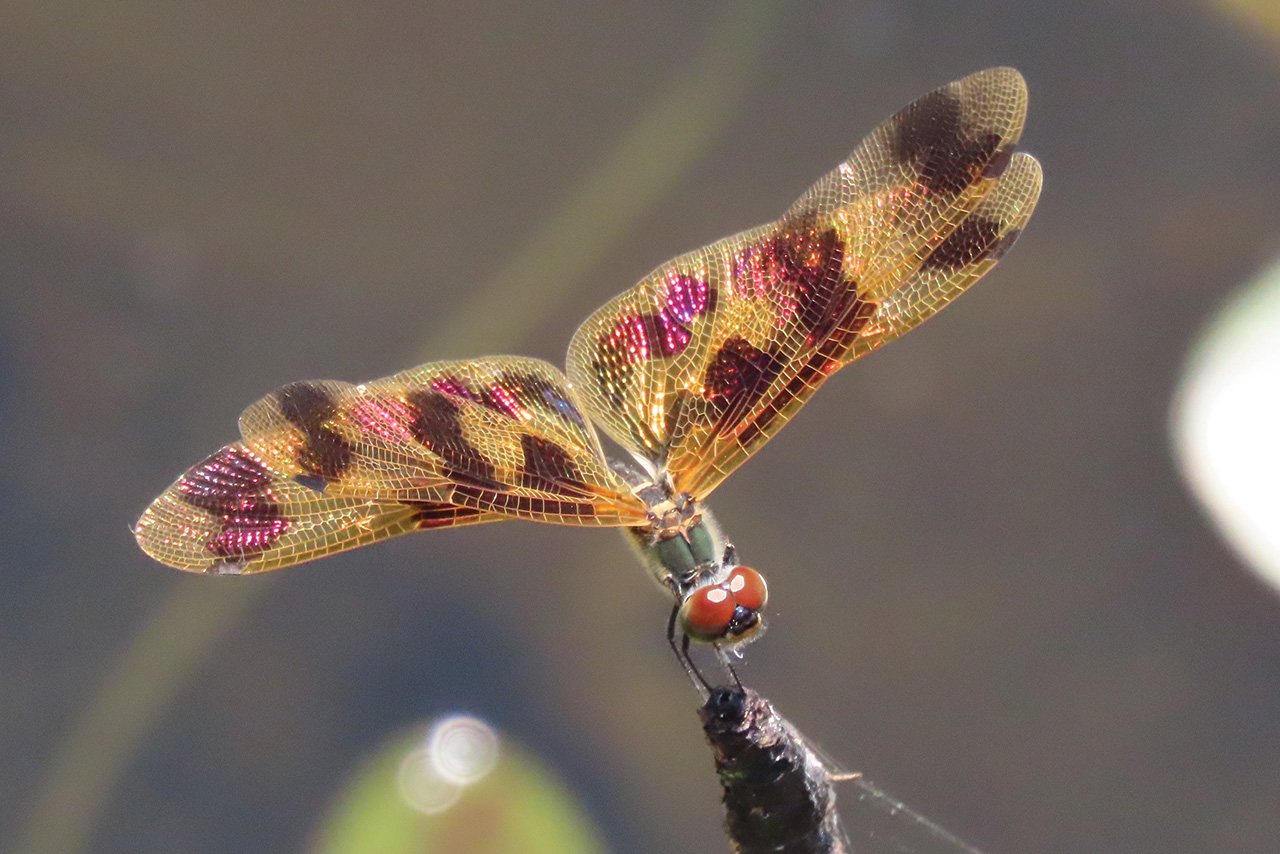
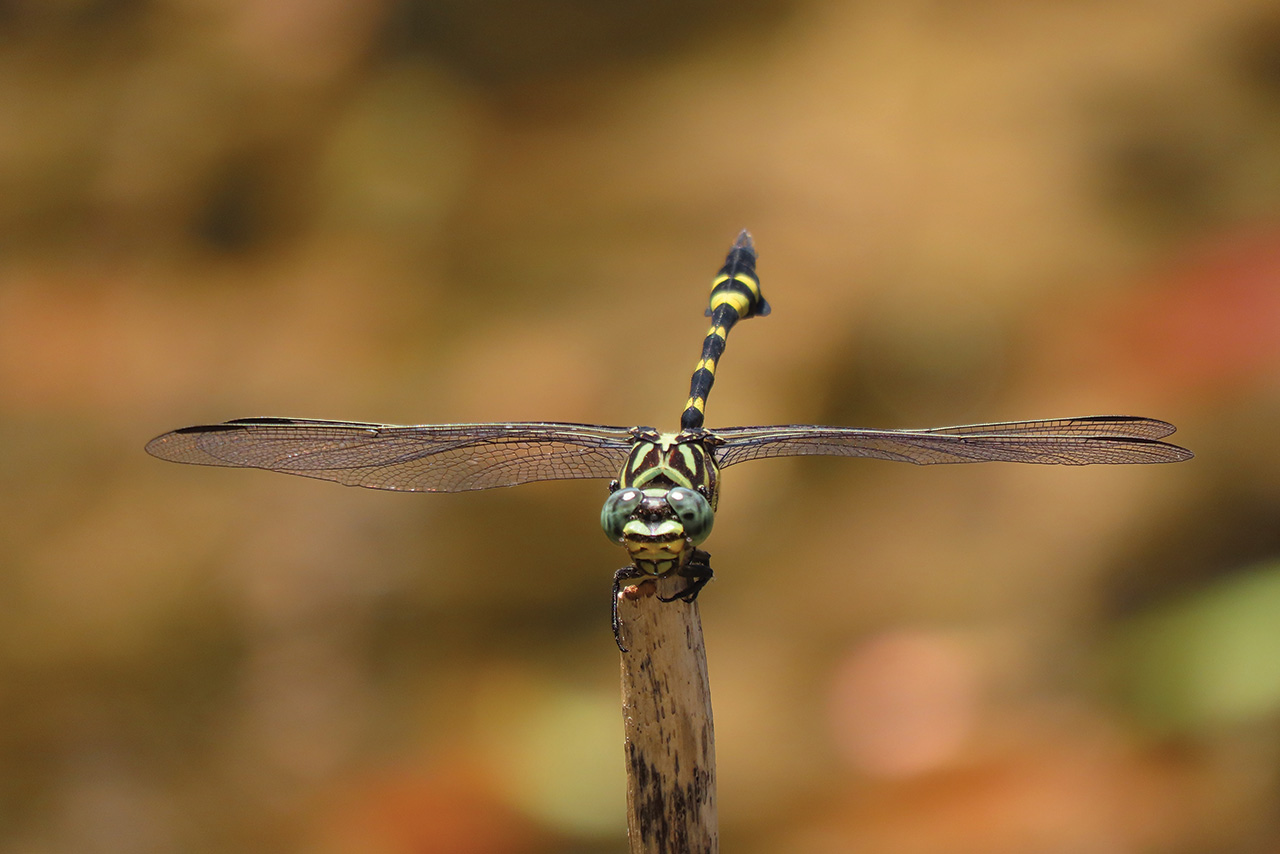
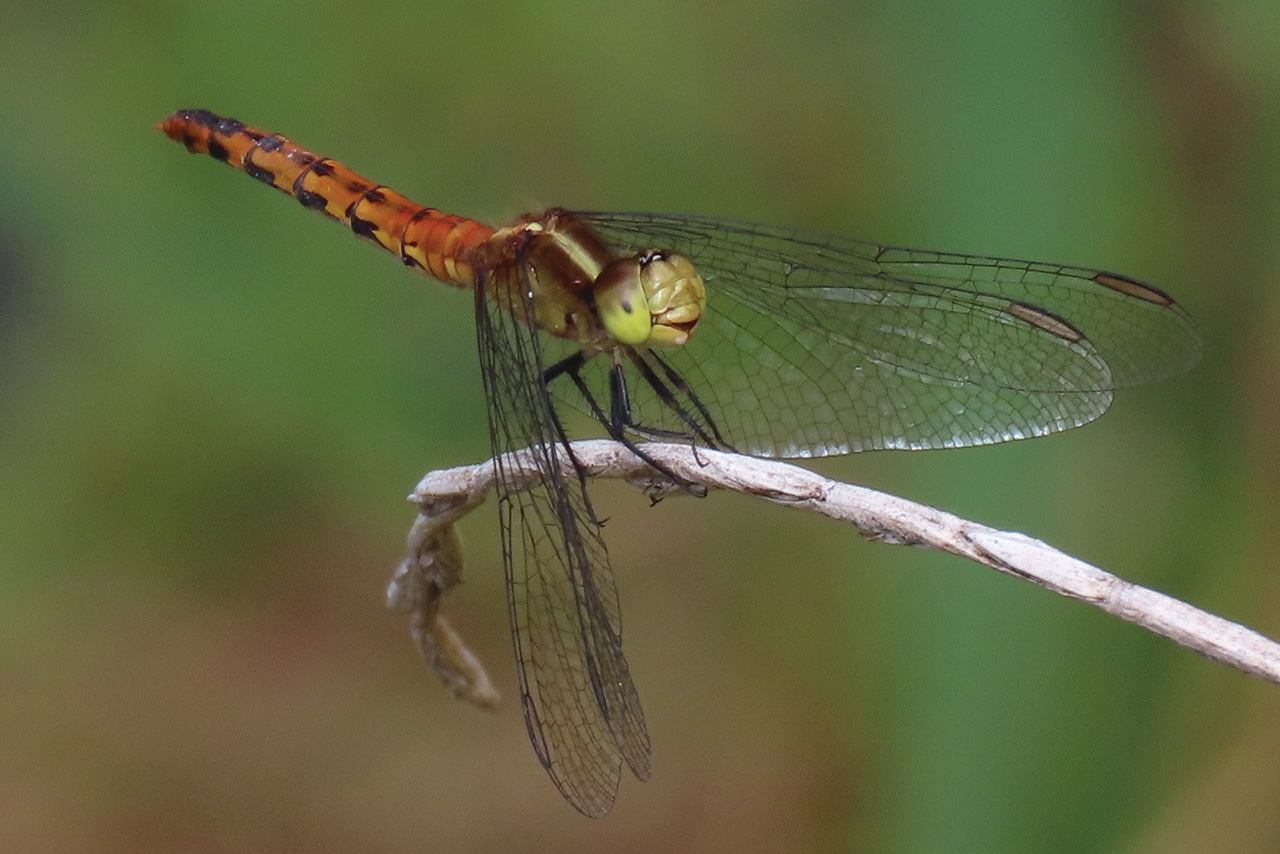
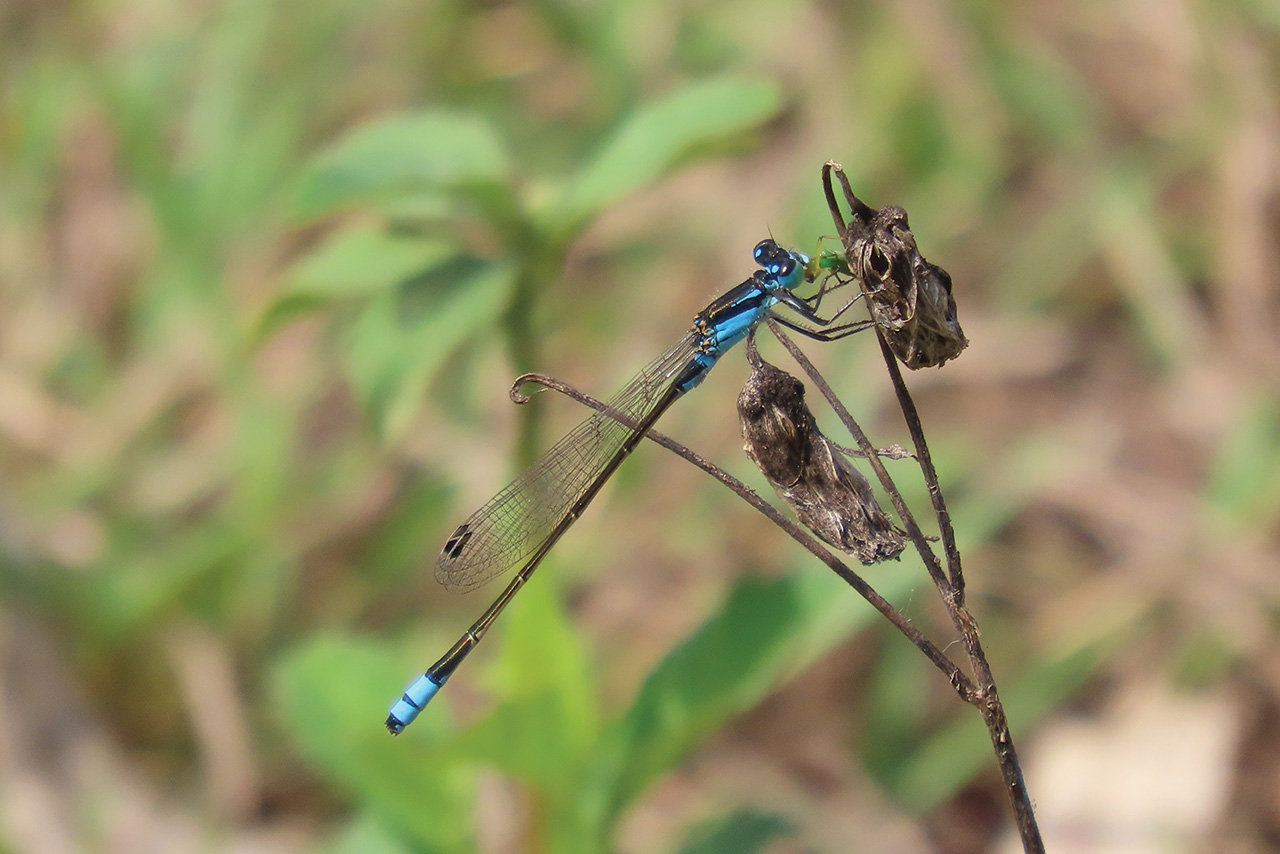
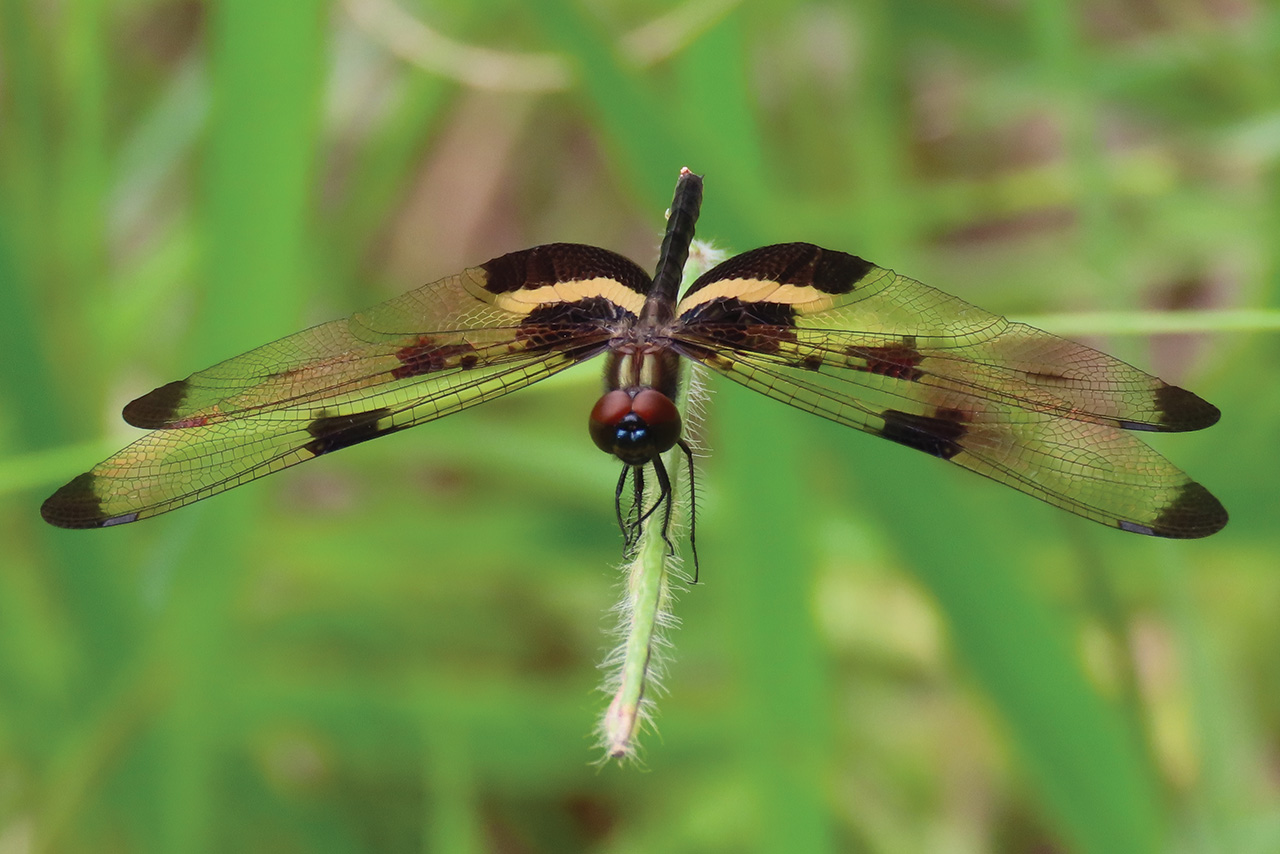
Gallery above some of the 37 species of odonates recorded on Patrick and Wendy’s property.
Article and photos by Patrick
and Wendy Shanley
Land for Wildlife members
Moorina, Moreton Bay
References and Further Reading
Burwell C (2024) Dragonflies and Damselflies of South-East Queensland. A Queensland Museum Guide. shop.qm.qld.gov.au
Smith D & Neill G (2022) Brisbane’s Common Odonata (Dragonfly and Damselfly). Queensland Naturalist’s Club. qnc.org.au
iNaturalist – inaturalist.ala.org.au