
Around two thirds of Australia’s natural environment is privately owned, which means landholders play a critical role in conserving biodiversity. Most of our scientific understanding of wildlife comes from research done on public lands. This has created a huge gap in our knowledge amid this era of biodiversity loss.
Through the use of fauna cameras, citizen scientists are contributing to a better understanding of species distributions, populations change over time and responses to environmental pressures.
Have you ever walked through the bush and wondered, “Where are all the animals?”. This experience is known as the fauna observer effect – an unintended disturbance where the presence of people causes animals to alter their behaviour. Wildlife may retreat, reduce feeding or show signs of stress, which can influence what is observed. Fauna cameras help to overcome this challenge by offering a more passive option to monitor wildlife activity without human presence. The images and videos they capture help fill knowledge gaps, confirm species presence or absence and inform conservation planning.
Thanks to more affordable camera technology and the rapid rise of AI powered image analysis, wildlife monitoring on private properties is now more accessible than ever. Whether you’re hoping to spot gliders, bandicoots, macropods or other more elusive animals, a thoughtfully placed fauna camera can reveal fascinating insights into the species sharing your land.
With so many new models on the market, selecting the right camera can feel overwhelming. A good fauna camera should be weatherproof, easy to use and capable of capturing clear images at night, as many native species are nocturnal.
Key Fauna Camera Features
- Fast trigger speed (0.1–0.2 seconds) to capture quick moving animals.
- High image resolution (24–60+ megapixels) to support accurate species identification.
- Reliable night vision, ideally with no glow infrared LEDs to minimise disturbance.
- Strong battery life or solar capability for long deployments
- High waterproof rating to cope with Queensland’s weather.
Solar powered or Wi Fi enabled cameras can add convenience, particularly for cameras placed in hard to access locations.
Tips for Getting the Best Images
- Install cameras low to the ground (knee height) for bandicoots and small mammals.
- Use waist to chest height for macropods and larger animals.
- Position cameras along animal tracks, fence gaps, creek lines or near habitat features such as fallen logs or permanent water.
- Where possible, face cameras south to reduce sun glare.
- If need be, angle the camera slightly downwards by putting a spacer like a stick between the top of camera and its attachment point. Some cameras now come with levers to set the angle.
- Avoid pointing cameras toward neighbouring properties to remain compliant with privacy laws.
Use Attractants (where appropriate)
Researchers and professional ecologists operating under valid government permits may use attractants, such as peanut butter, to encourage target wildlife species to approach camera traps. Similarly, Pest Management Officers may employ attractants including chicken carcasses or sardines when targeting feral predators such as foxes or cats. It is important to note that the use of bait may require a permit, particularly if images captured are intended for publication. All relevant regulatory, safety and ethical requirements must be met prior to deploying any attractants.
As an alternative to food-based attractants, minimal habitat disturbance may be used to increase animal interest within the camera’s field of view. This can include lightly digging a small hole or gently scuffing leaf litter to create visual or scent cues that attract fauna, while avoiding environmental harm.
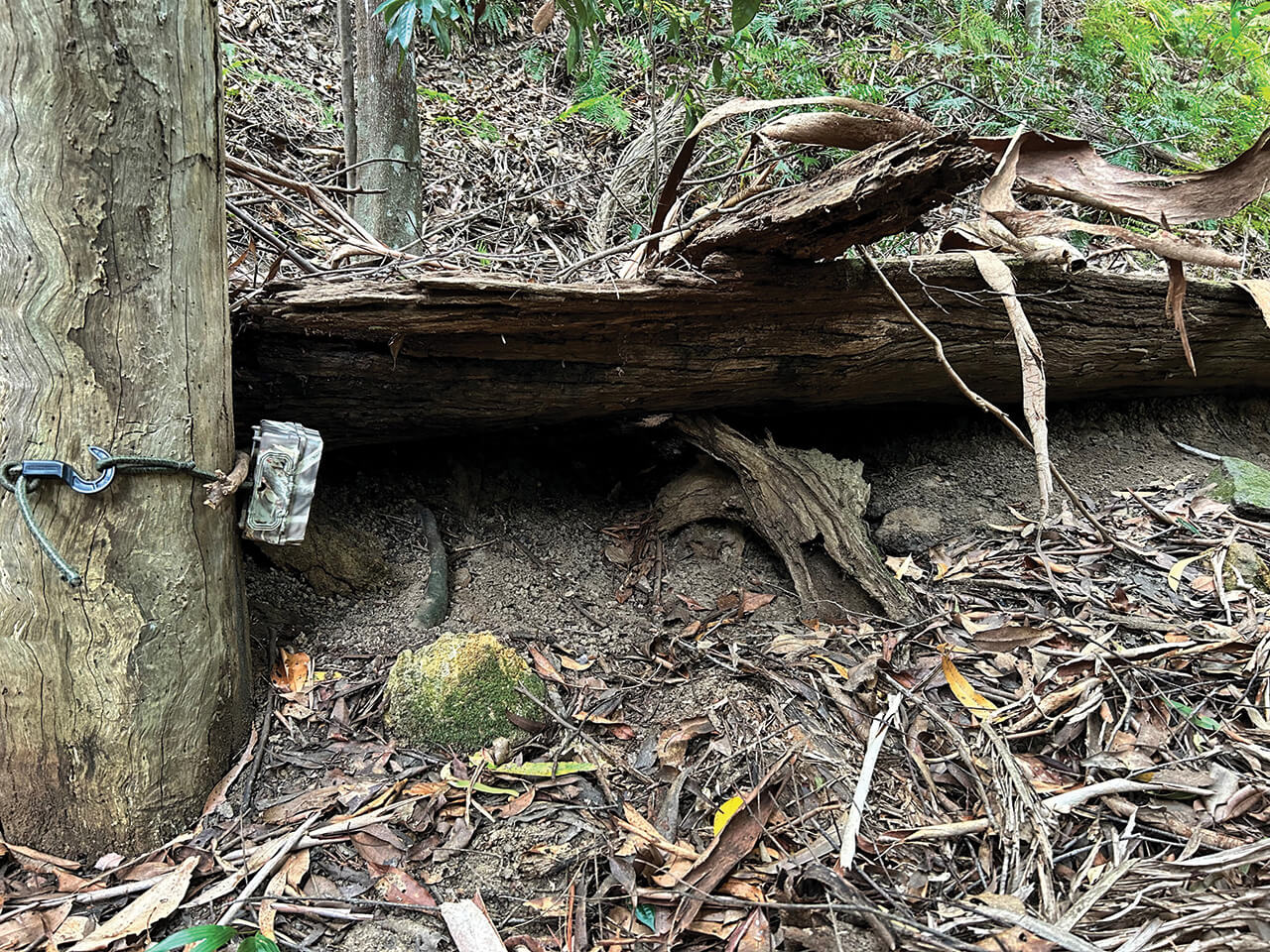
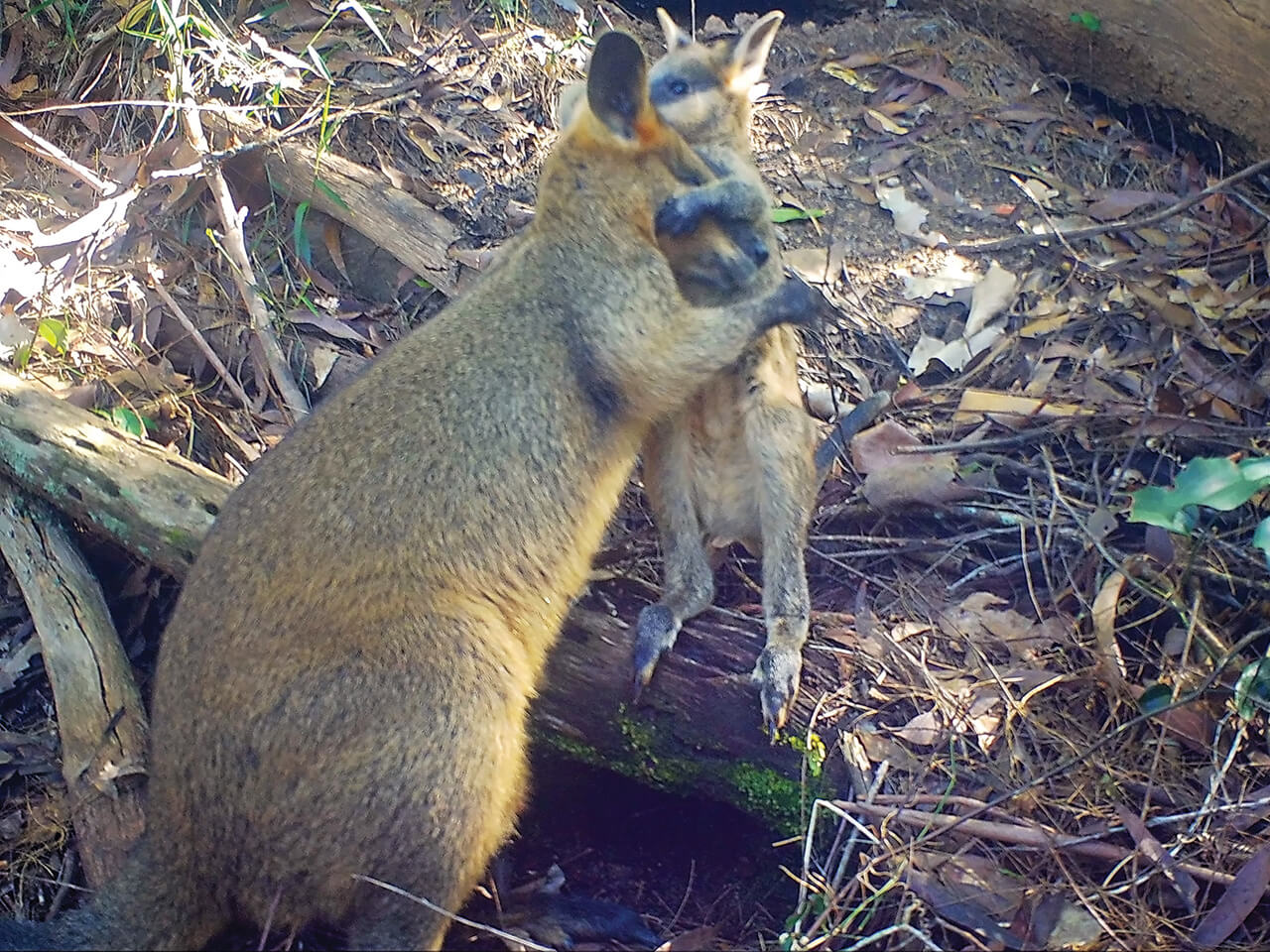
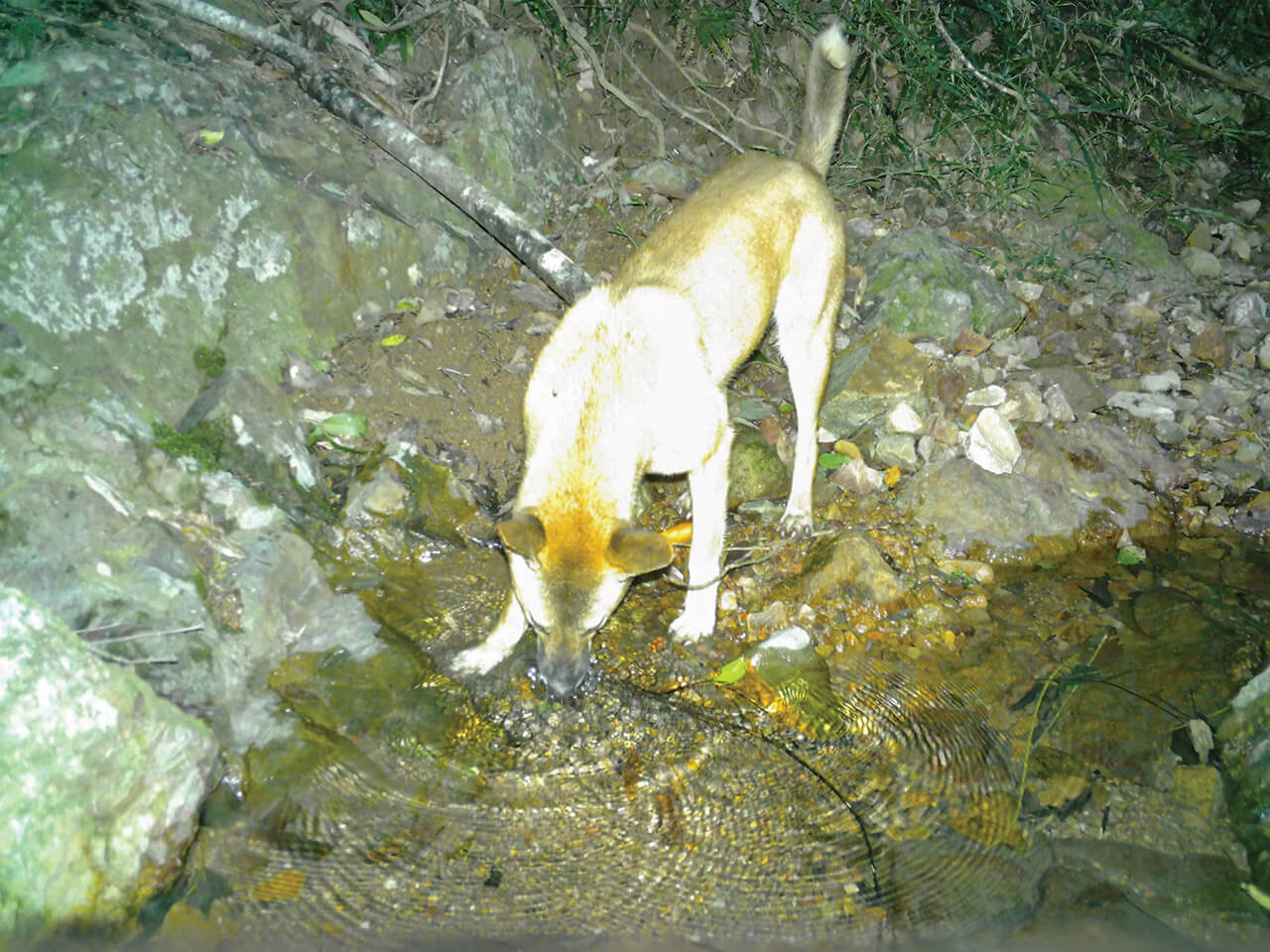
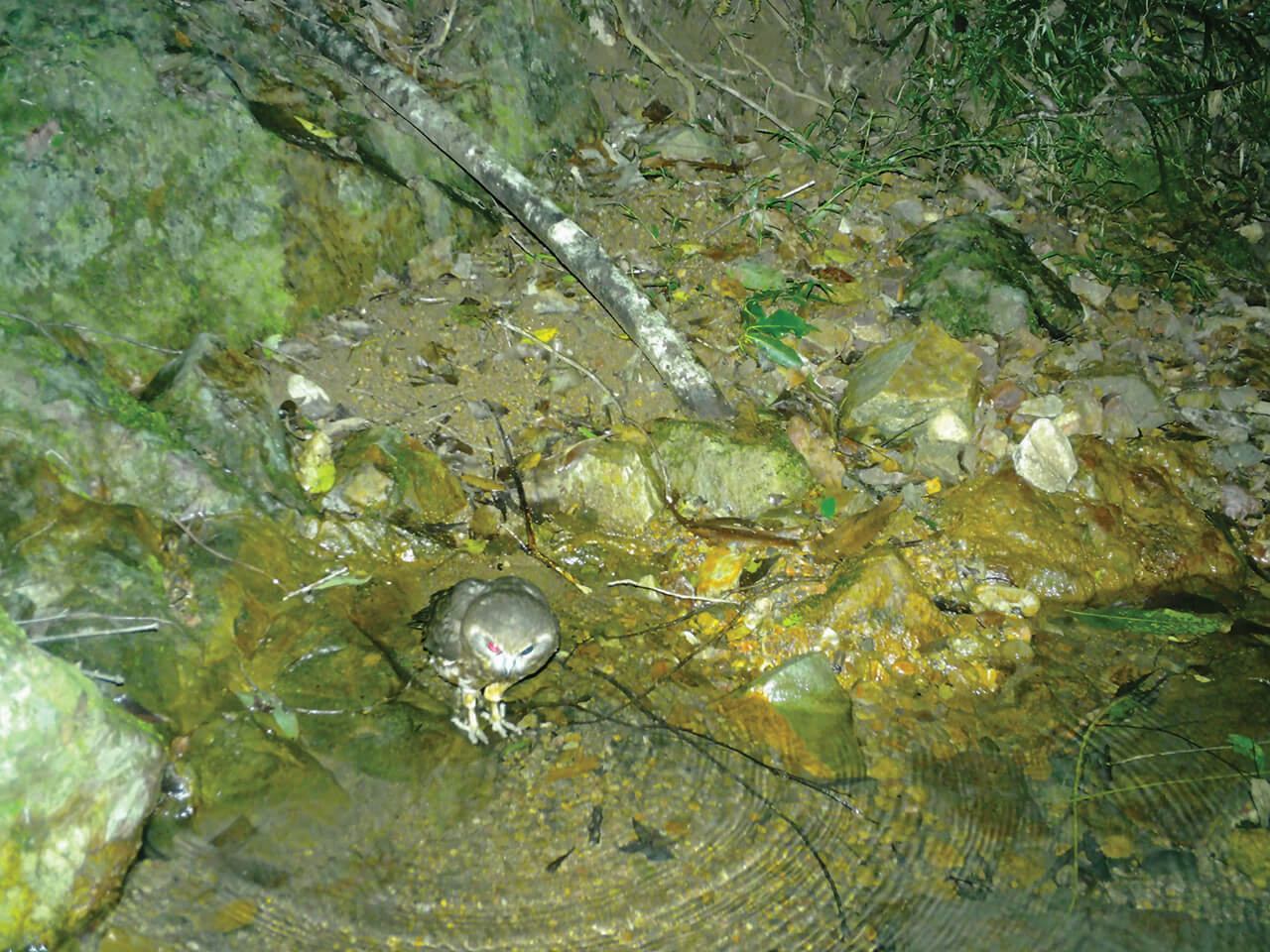
Users should be aware that employing either of these methods changes the approach from passive observation to active intervention, which may influence animal behaviour and should be carefully considered.
Check Regularly – but Discreetly
Frequent visits can influence animal behaviour. Longer deployments using larger SD cards or solar assisted power help reduce disturbance.
Minimise False Triggers
Clear grass and vegetation using secateurs from the detection zone. Swaying leaves can generate thousands of empty images. Preventing false triggers saves battery life, storage space and time.
Use AI Tools for Image Analysis
Sorting through thousands of images can be time consuming, but recent advances in machine learning mean landholders no longer have to do it all manually. Here are three AI tools available that can assist with detecting animals and identifying species.
- Stickybeak (Australia specific AI for fauna cameras) – Developed by the Tasmanian Land Conservancy, Stickybeak uses the open source MegaDetector to detect animals, people, and vehicles, then applies models tailored to Australian fauna to identify species. Users can confirm or refine predictions, improving accuracy over time.
- AddaxAI (Offline AI image analysis) – AddaxAI is an open source, offline tool that detects and identifies species in camera trap images and videos. Using MegaDetector alongside ecologist developed species models, it is well suited to landholders who prefer a private, local workflow.
- WildObs (National wildlife camera trap infrastructure) – The Wildlife Observatory of Australia (WildObs) is developing a national AI powered system to manage Australia’s growing camera trap data. It aims to support automatic species detection, centralised data storage and streamlined sharing with platforms like the Atlas of Living Australia.
While artificial intelligence tools can assist in managing and analysing large volumes of data, their capacity for accurate species identification – particularly at a local or regional level – remains limited. This is due to the reliance on existing species models, many of which are still under development and may not comprehensively represent local biodiversity. As a result, traditional reference materials continue to be the most reliable sources of information for species identification.
Recommended references include:
- Wildlife of Greater Brisbane.
- Strahan’s Mammals of Australia by Andrew M Baker.
- A Field Companion to the Mammals of Australia by Steve Van Dyck, Ian Gynther and Andrew Baker
- Australian Mammal Identification Facebook Group
- Tracks, Scats and Other Traces: A Field Guide to Australian Mammals by Barbara Triggs.
What Should You Do with Your Fauna Camera Images?
While it’s wonderful to build a personal record of wildlife on your property, sharing this information ensures it benefits conservation into the future – especially if ownership of the land changes.
Platforms such as iNaturalist allow you to store wildlife records and also contribute data to the Global Biodiversity Information Facility, Atlas of Living Australia and CSIRO which supports scientific research, wildlife management and conservation planning nationally and globally.
With the right camera, thoughtful placement, and the support of AI analysis tools, landholders can play a meaningful role in wildlife monitoring. Fauna cameras not only support conservation efforts – they also offer a unique window into the hidden lives of native but also non-native (feral) animals on your property.
Photo at top: A native Bush Rat (Rattus fuscipes) captured on a Reconnyx fauna camera. Note the tail is the same length as the body and the large ears.
Article by Nadia Joyce
Land for Wildlife Officer
Sunshine Coast Council