
On a quiet stretch of creek in Brisbane’s west, a tagged platypus surfaced briefly before slipping back beneath the water. It was a moment that thrilled researchers and later delivered a remarkable story. That same animal was later identified more than 20 kilometres away, having travelled through the waterways of the Maiwar (Brisbane River), from Moggill Creek to Bullockhead Creek, crossing the Brisbane River along the way. This rare confirmation of long-distance movement demonstrated that Brisbane’s waterways remain connected, and that platypus can still move through an urban landscape when suitable habitat corridors exist.
This journey tells a much bigger story about Brisbane’s platypus, one of resilience, relationship-building, and renewal; and of the growing collective effort to understand, protect and restore the waterways they depend on.
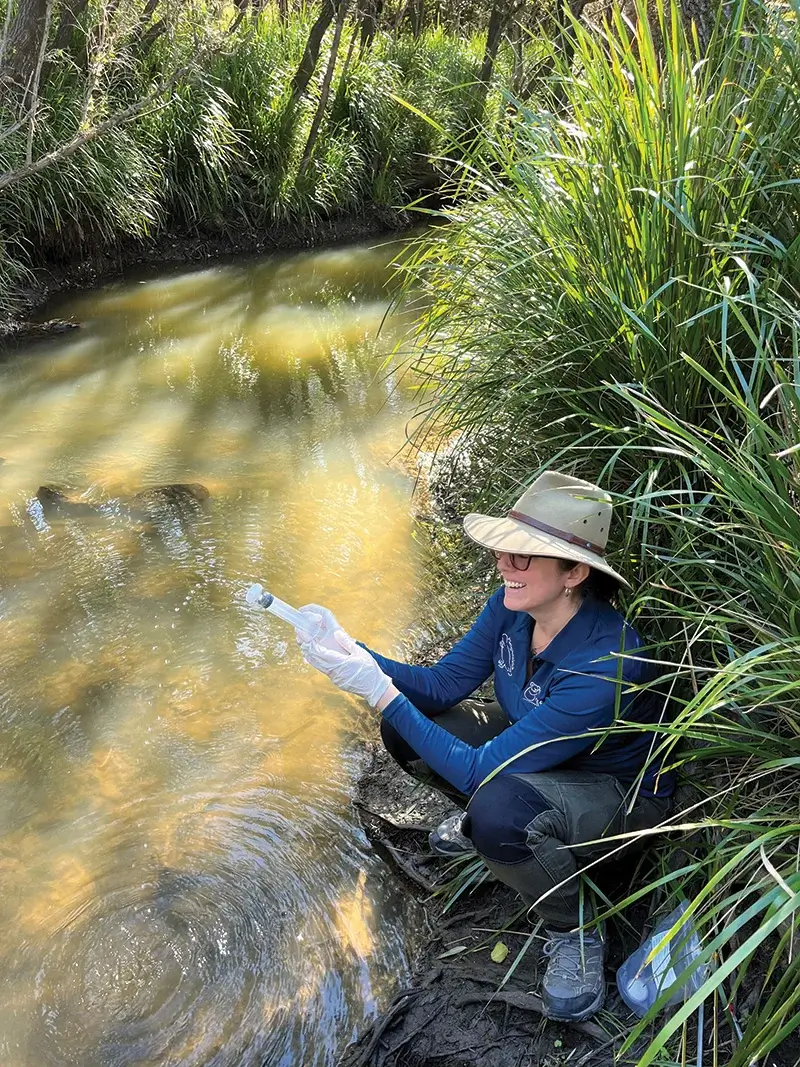
Platypus are elusive and difficult to monitor. For many years, their presence in Brisbane’s waterways was based on local sightings and knowledge. That changed with Brisbane City Council’s adoption of environmental DNA (eDNA) monitoring, a scientific technique that detects genetic traces platypus leave behind in water samples.
Since monitoring commenced in 2019, repeated annual sampling has provided a clearer picture of where platypus are present, where populations may be declining, and where conservation action should be prioritised. Platypus presence has been confirmed in multiple Brisbane creeks including Moggill, Kholo, Pullen Pullen, Shelley, Cabbage Tree (Lake Manchester), Jindalee, Wolston, Bullockhead and Sandy creeks, as well as the South Pine River and Albany Creek in the north.
Combined with traditional surveys, trapping studies and local community knowledge, this information is helping shape a more strategic, citywide approach to platypus conservation, moving beyond individual sites to focus on whole catchments, and the waterways and communities that connect them.
Protecting platypus in a growing city requires collaboration. Brisbane’s approach is built on partnerships between First Nations peoples, residents, community organisations, council programs such as the Land for Wildlife and researchers.
Brisbane City Council works closely with Wildlife Queensland, Platypus Conservation Initiative, Australian Conservation Foundation, local catchment groups, Land for Wildlife partners and universities. Platypus move across Council boundaries so regional partners including Council of Mayors (Resilient Rivers Initiative), Seqwater and neighbouring local councils are also important to ensure coordinated action across the wider catchment.
Protecting platypus requires a coordinated approach across waterway health, habitat restoration, stormwater management, compliance and community engagement programs. Together, these efforts help address both localised threats and broader pressures on waterway health to support healthy and resilient platypus populations.
Some of the most enduring platypus conservation work in Brisbane has been driven by community commitment.
In Brisbane’s western suburbs, the Moggill Creek Catchment Group has monitored Platypus for more than two decades in catchments containing many of Brisbane’s Land for Wildlife properties. Their work has confirmed Moggill Creek as a stronghold for Brisbane’s Platypus population and provided extensive data that supports research and management decisions.
In the Kholo and the Shelley Creek catchments, it was a Land for Wildlife partner who first alerted Council about the presence of platypus, helping trigger broader monitoring and on-ground action. Since then, landholders and volunteers from the Pullen Pullen and Kholo Creek Catchment Groups have played a pivotal role in annual platypus surveys, community walk and talk events, and creek restoration works designed to improve habitat condition.
Further downstream, the Wolston Creek Catchment is emerging as a priority area for community action and investment. Recent trapping studies in Wolston and Bullockhead creeks have confirmed breeding and connectivity within this highly urbanised landscape, reinforcing the importance of protecting and restoring creek habitat. This area is now a key focus for Brisbane City Council’s platypus conservation efforts, with habitat restoration underway along Bullockhead Creek through funding from the Australian Government Urban Rivers and Catchment program and Council’s Natural Waterway Rehabilitation Program.
Wolston and Centenary Catchments Group is steadily working to restore creek corridors, conduct biodiversity surveys, and host educational events that build community connection, care and responsibility for platypus conservation.
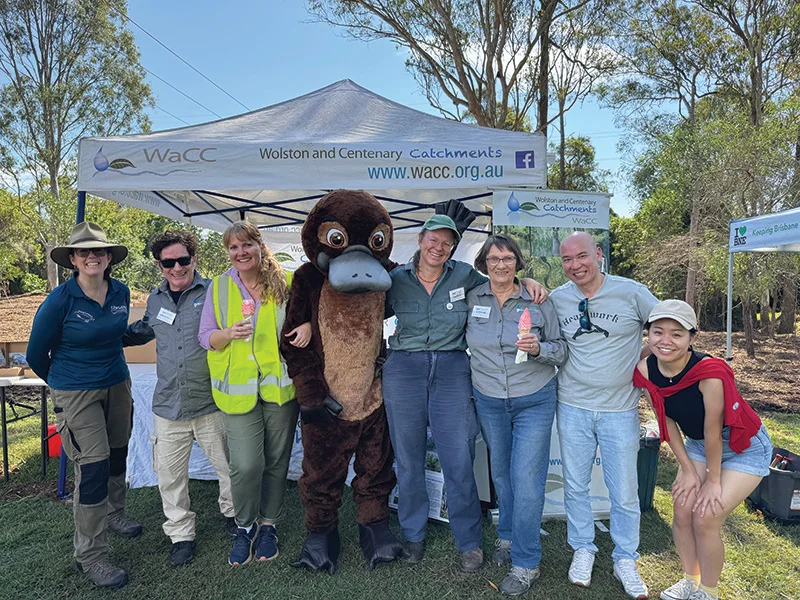
The Yuggera Ugarapul Peoples are engaged in restoration work in the catchment, including a cultural heritage assessment in 2025 at a site along Bullockhead Creek. Combining archaeological practice with generational cultural knowledge, these opportunities heal more than the land. It is a chance to restore cultural memory, revive important species, and reconnect Country with community.
Land for Wildlife is actively seeking to engage with residents and commercial and industry landholders in the Wolston Creek Catchment, recognising the critical role that private land plays in protecting riparian corridors and supporting long-term platypus survival.
Brisbane’s platypus story is one of cautious optimism, but also urgency. Research shows platypus remain vulnerable to habitat loss, altered flows, declining water quality, fragmented waterways, and fishing gear such as enclosed Opera House-style yabby traps, which can pose a drowning risk to platypus and other aquatic wildlife. Continued effort is needed to protect the habitats that allow these animals to move, feed and breed.
Now is the time to build on the momentum already underway. Community members can help by reporting platypus sightings, supporting wildlife-friendly fishing practices, caring for waterways by reducing litter and managing stormwater runoff, and getting involved in local catchment groups or the Land for Wildlife South East Queensland program to help restore habitat on public and private land.
Brisbane’s platypus have shown us what is possible when waterways remain connected. Across South East Queensland, there are many ways to get involved in helping platypus, from supporting local monitoring and habitat restoration projects to volunteering with your local catchment group. By working together, we can help ensure these remarkable animals continue to thrive in waterways across the region. To learn more, contact your Land for Wildlife officer, local catchment or PlatypusWatch group.
Image top: Photo by Edith Wiskar
Article by Natalie Costanzo and Amanda Maggs, Land for Wildlife Officers, Brisbane City Council and Amanda Brigden, Senior Program Officer, Brisbane City Council