
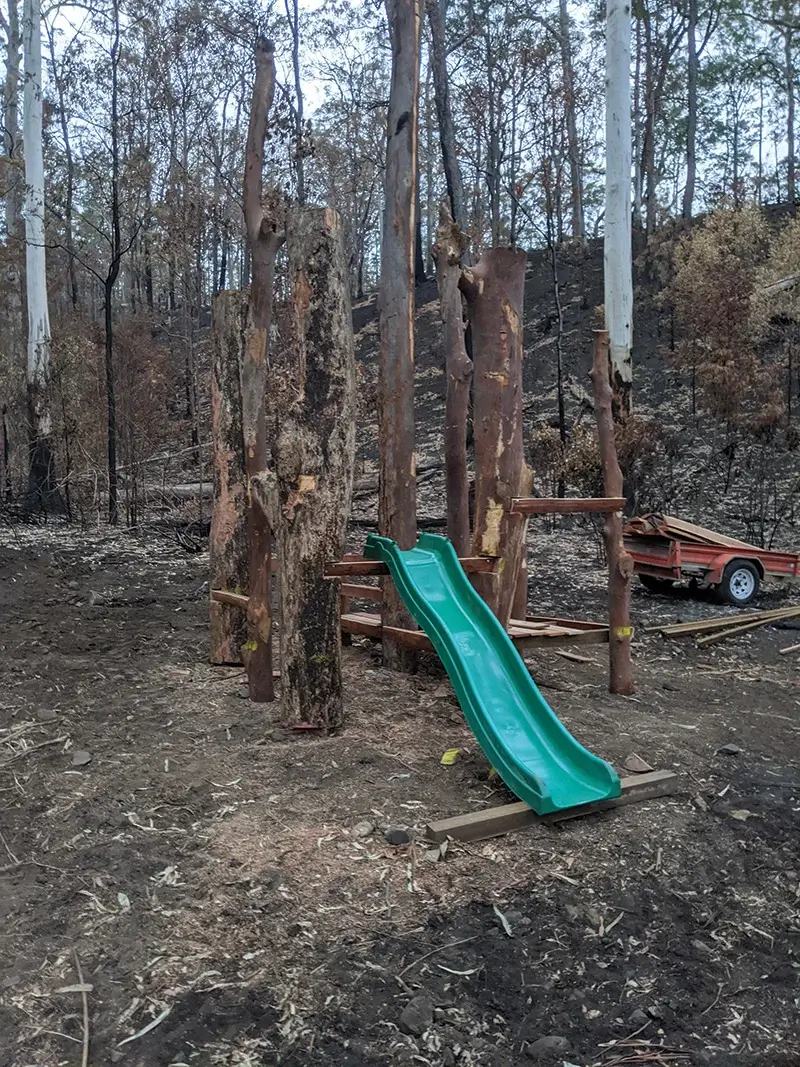
We had only owned the place for about five months, still just discovering what we had, when the 2019 Mount Barney National Park bushfire came through and burnt approximately 95% of our property. About a month later, the fire came back. It had been on walkabout down in northern New South Wales. The second visit burnt the rainforest, already drought affected from the first fire. Our sheds were saved, thanks to the valiant efforts of the local Rural Fire Service Queensland (RFSQ). Other than that, it was devastating.
There were a few positives from the bushfire, if you look hard for them. Our girls got a playground built from fallen trees, and we made ‘bushfire damper’ in a smouldering tree. After the fire, you could read the history of the place in a way you couldn’t before. Where our house sits was once a logging camp and truck-loading point. Local oral history tells us a large tree from near our house ended up at Enrights Sawmill in Beaudesert, where it remains on display out the front.
The ridgeline at the back of our property formed part of the main jinker track running towards the breaking-down mill. After the fire, old trails, ruts and logging-road excavations emerged from the ash, making the property a little easier to explore.
In 2024, another fire came through from a reignition of a controlled burn Queensland Parks and Wildlife Service (QPWS) had started to protect the rainforests in the park. By then, we had learnt the value of well-maintained access trails. We had added new ones and kept them four to five metres wide. Those trails allowed the local RFSQ Firefighters and QPWS Rangers to establish control lines that stopped the fire at the rainforest margin. The aftermath brought its own complications. Soil instability has brought down large old trees along the rainforest edge, which in turn has brought down trees in the rainforest itself, leaving gaps in the canopy and opportunities for weeds.
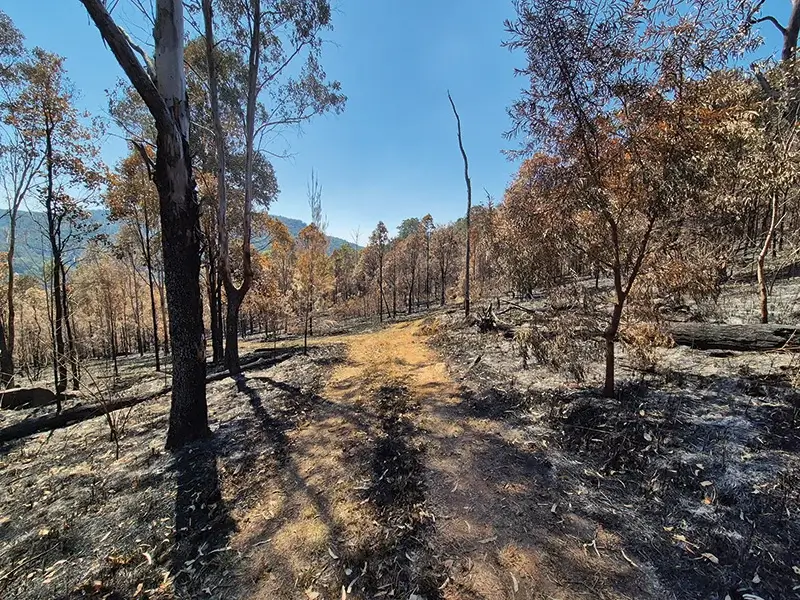
The property layers as you climb, with grassy slopes merging into open eucalypt forest, then She-oak stands. Dunn’s white gum forest (Eucalyptus dunnii), wet sclerophyll and rainforest occupy the mid to upper reaches and riparian lines. Weeds are a challenge across the whole property, and Lantana (Lantana camara) is the headline problem, especially in the Dunn’s white gum forest and at the rainforest margins. Being 54 steep hectares that we can only visit roughly twice a month, we’ve had to be pragmatic. The area around the house has become the natural priority. It sits on a small, gently sloped elevated plain, right in the heart of the Dunn’s white gum forest and adjacent to the rainforest. One unexpected gift of the 2019 fire was that it knocked back the existing Lantana thickets, allowing us to get in early on regrowth before it got away from us again. This has allowed the natural vegetation to re-establish in the wonderful way nature can if you let it.
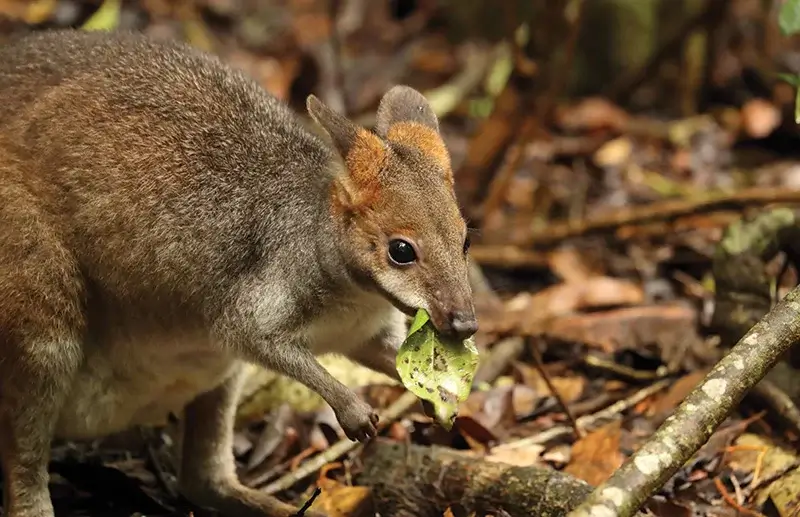
What we hadn’t fully appreciated before the 2019 fire was the stinging tree situation. The property has both Giant Stinging Tree (Dendrocnide excelsa) and Shiny-leaved Stinging Tree (D. photinophylla), and we’d been warned about them by the previous owners. Before the fires, most were large and had grown tall under the rainforest canopy, so they weren’t really at arm or leg height. Post-fire, all bets were off. Giant Stinging Trees are pioneer species and come back fast. I discovered first-hand why one of their names is “ankle biter”. They are a food source for Pademelons and are naturally occurring here, so removing them has never been an option. Now most are tall enough again that they’ve stopped being so hazardous.
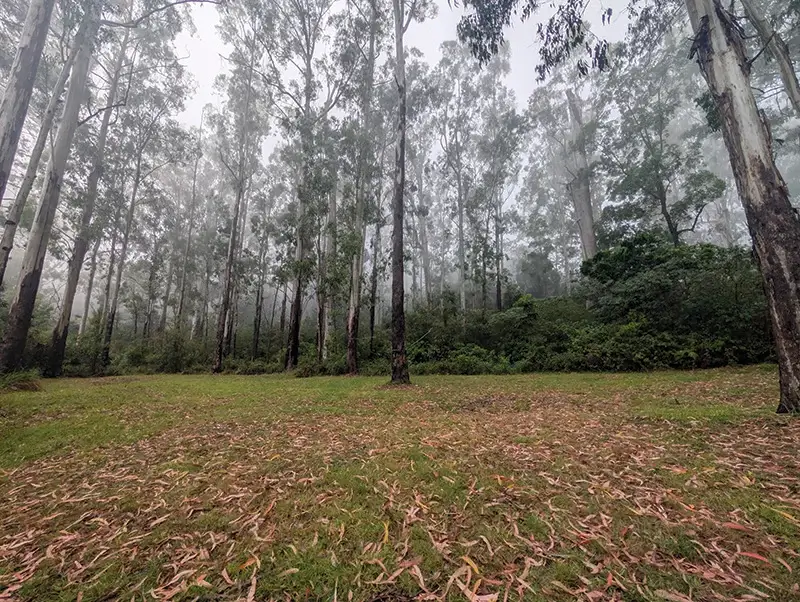
We have camera trap images from before the 2019 fires, including an Albert’s Lyrebird (Menura alberti) in the rainforest. Our daughter, five years old at the time, said it looked like a dinosaur. She wasn’t wrong. We recorded one in 2023 and another in 2024, but it wasn’t until June 2025 that we started seeing them with any frequency in the rainforest. That felt like a recovery milestone.
During our initial Land for Wildlife meeting, our officer Keith McCosh pointed out koala (Phascolarctos cinereus) scratchings on some trees and mentioned the habitat overlay. We knew Koalas were there somewhere; we just hadn’t seen one. In November 2024, one finally appeared on camera. We literally shouted with joy. We’ve since captured video of one scent-marking a tree, seen them on two cameras with reasonable regularity, and have heard the mating call. At a quiet property in the dark, the first time you hear it, it takes a moment to process.
Other calls we have identified are similarly peculiar: Yellow-bellied Glider (Petaurus australis), Greater Sooty Owl (Tyto tenebricosa) and the Australian Masked Owl (Tyto novaehollandiae). Before the 2019 fires, we would regularly see and hear groups of Glossy Black-Cockatoos (Calyptorhynchus lathami) feeding on She-oak (Allocasuarina spp.) cones on the slopes behind our house. That stand was badly scorched, and we didn’t see the Glossy Black-Cockatoos for a long time. We first noticed discarded cone remains, or orts, in early 2025, the first sign they were returning. We didn’t start seeing the birds again until around September 2025. Glossy Black-Cockatoos are selective feeders, and She-oaks take years after fire to recover.
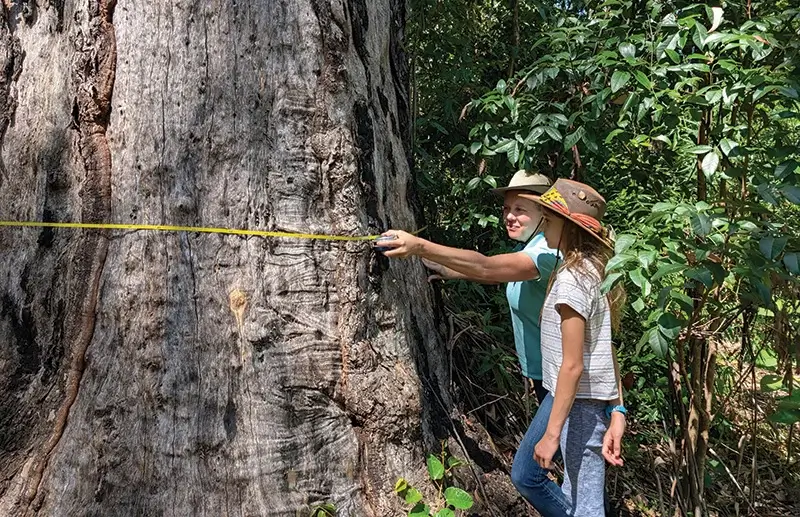
There are parts of the property we haven’t reached yet. We’re not ecologists, but we’re curious, amazed by nature and believe in contributing what we can. Our observations go into iNaturalist and FrogID, and every visit adds something to what we know about this small patch of earth. This country has harboured a remarkable ecology long before we arrived. We hope that what we do here, however modest, leaves the land and everything that lives on it in a better state than we found it, and that it continues to thrive long after we’re gone.
Read more about Stinging Trees here.
Image top: Albert’s Lyrebird (Menura alberti), affectionately named “the dinosaur bird” by the author’s daughter.
Article by Kris Logan & Inar Swift
Land for Wildlife Members, Burnett Creek, Scenic Rim
Images (except for Pademelon) by Kris Logan and Inar Swift