
When Chris and Martin purchased their 20.3 hectare property at Tallegalla in western Ipswich nine years ago, it was approximately 75% covered with mature lantana, had three areas of Cat’s Claw Creeper and had not been maintained for a number of years.
Martin and Chris saw this property with optimism, claiming that it would be a “fun project” to turn it into productive land and to preserve remnant patches of native vegetation. Neither of them were aware that there was a 2-hectare vine thicket at the top of a hill prior to purchasing, nor was it marketed as a positive feature by the real estate agent. Martin, having had just retired from a long career of natural area management, thought this was a very doable project.
Soon after purchasing, they joined Land for Wildlife in 2016, and I have visited their property several times over the last few years. During our recent site visit, hardly any lantana was encountered whist walking through the paddock, instead, regenerating Maiden’s Wattle (Acacia maidenii), Red Olive (Elaeodendron australe), Rough-leaved Elm (Aphananthe philippinensis) and Native Olive (Notelaea microcarpa) dotted the lush, rolling hills.
Martin and Chris run 25 head of Australian Lowline cattle, which are a small breed of cattle with relatively low impact and an efficient feed to biomass conversion rate. They are rotationally grazed throughout nine paddocks on the property and are only grazed for 3-4 months annually through the large top paddock that has the vine thicket.
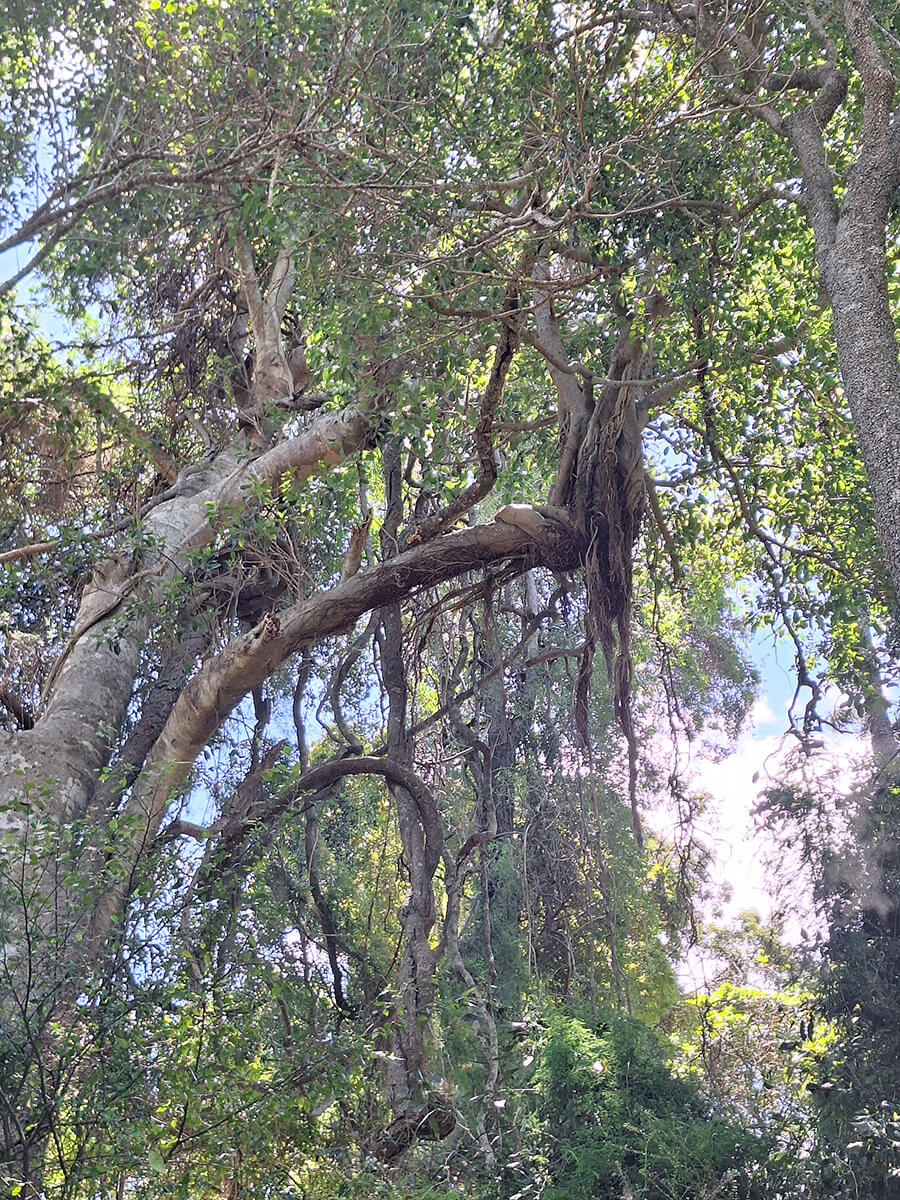
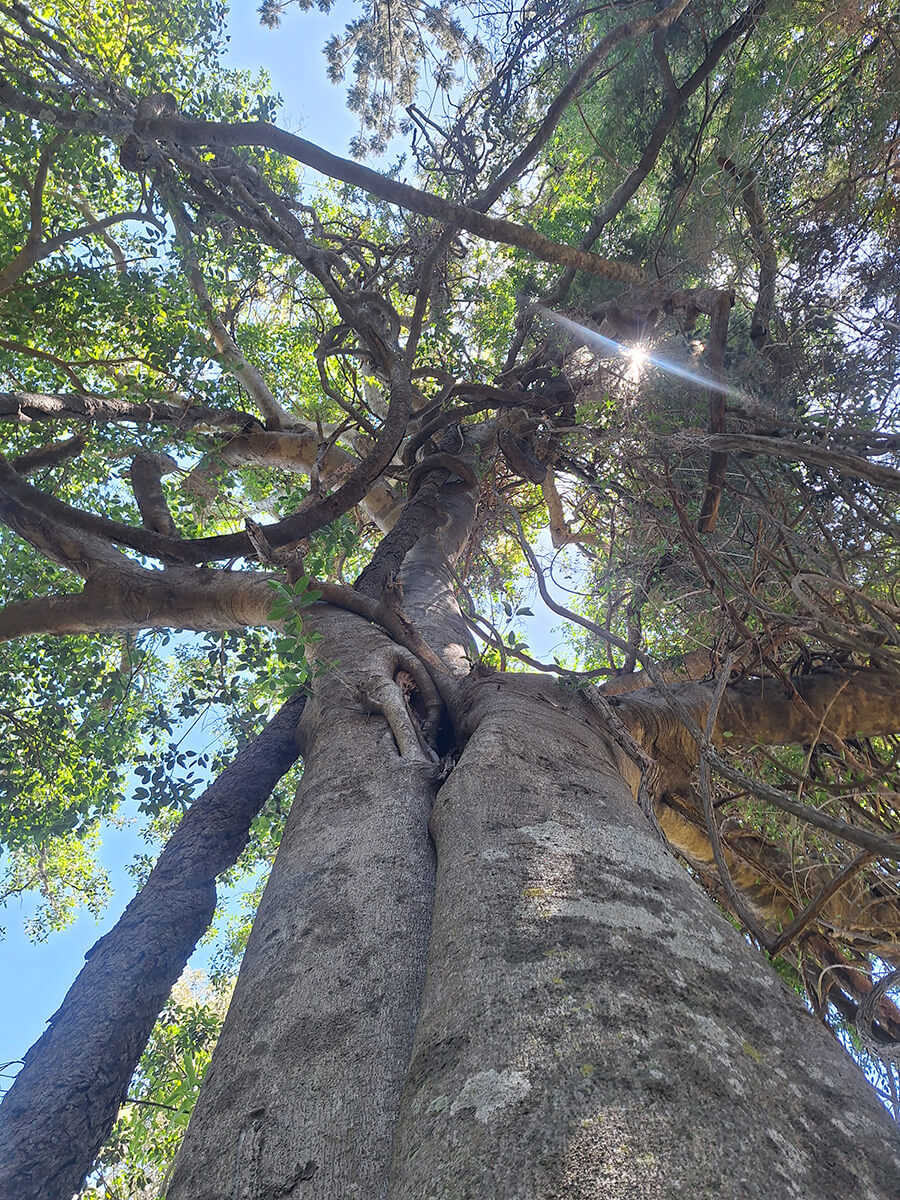
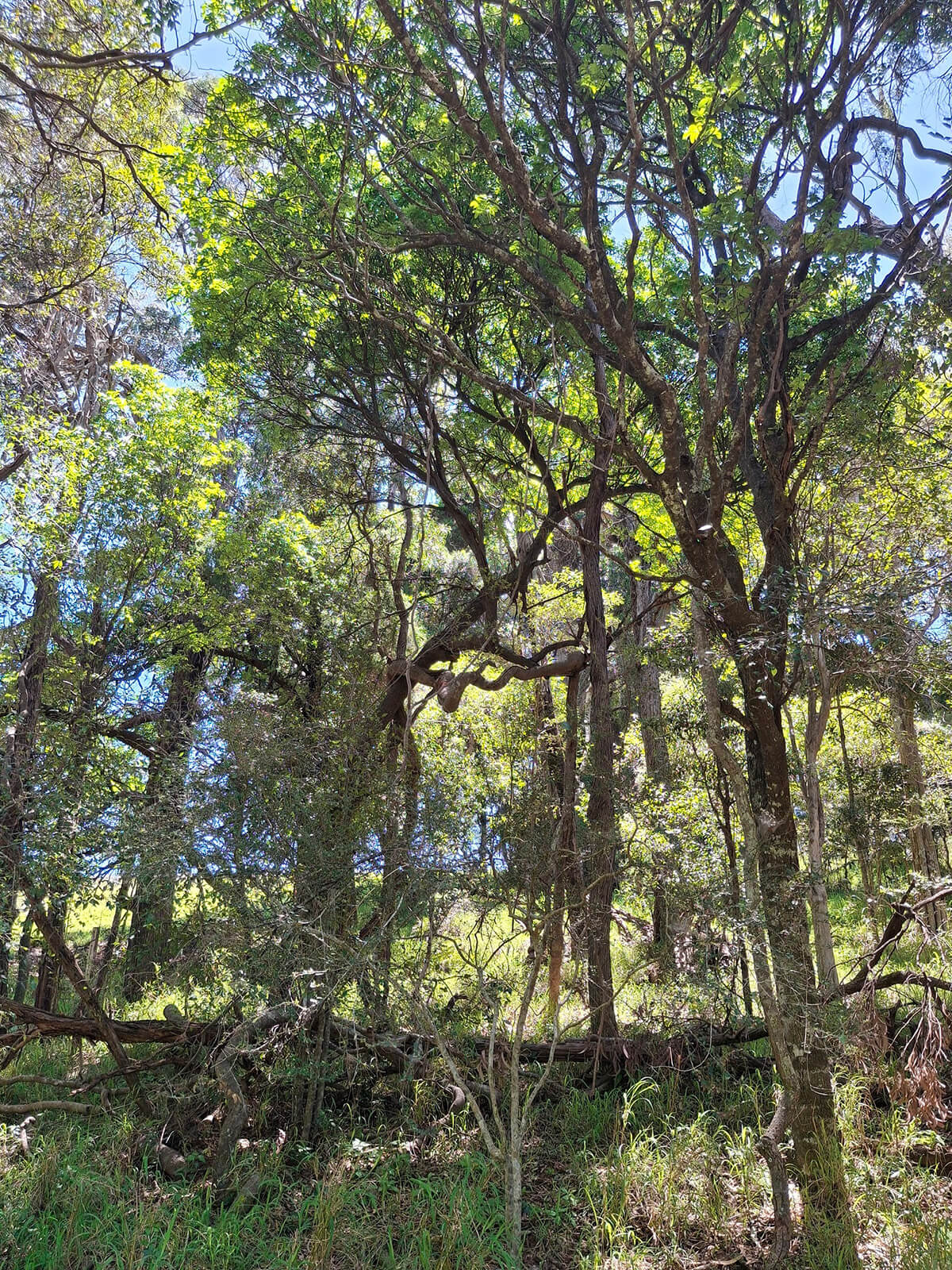
‘Vine thicket’ or ‘Scrub’ are often used as colloquialisms for dry rainforest or semi-evergreen vine thicket (SEVT). These vine thickets are dense and dark, and are typically made up of rainforest tree species with a low canopy height (less than 9m high), small-sized leaves (2-7 cm long) and the abundance of trees with swollen trunks, such as bottle trees (Brachychiton spp.) or figs as emergents, which rise above the canopy. As the name suggests, twining or scrambling vines are also a prominent feature, as is the mixture of evergreen, semi-evergreen, and deciduous tree species.
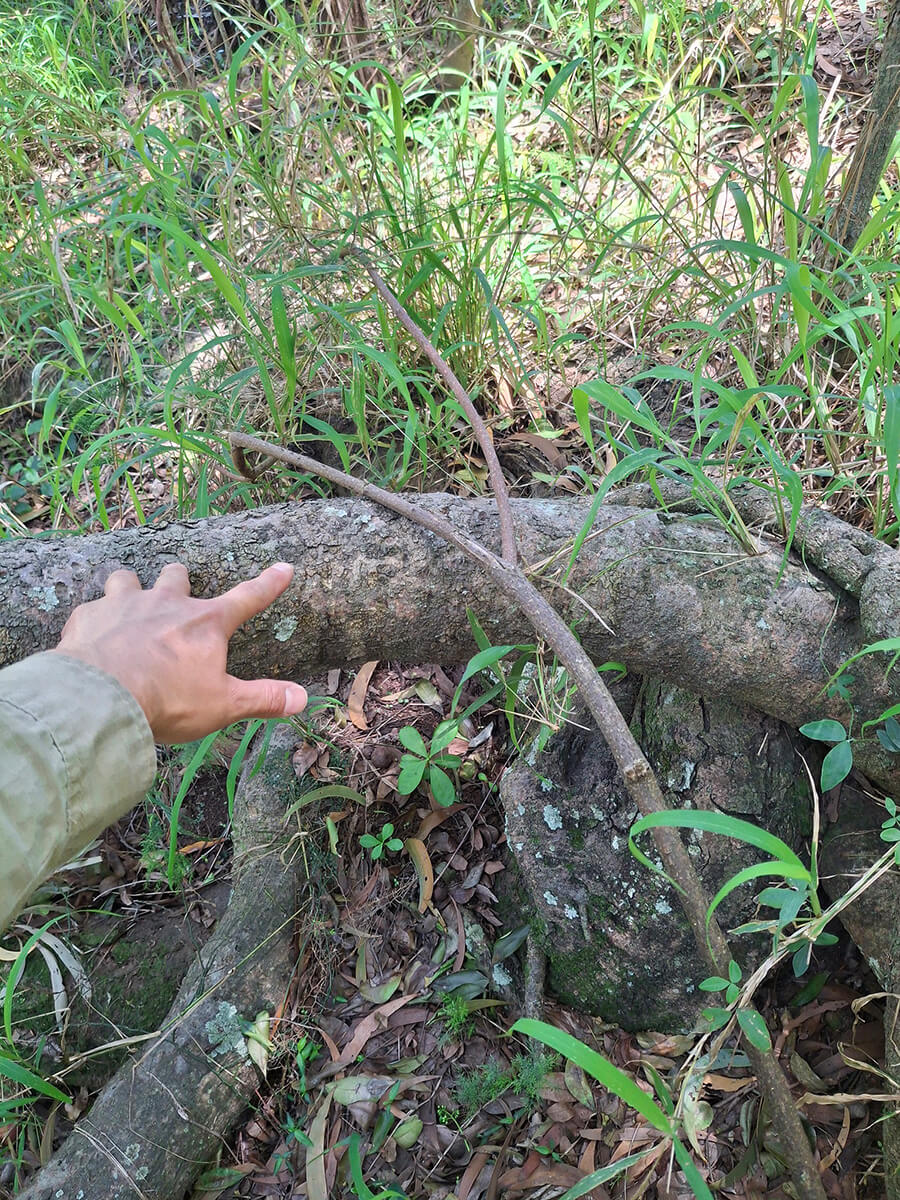
The temperature dropped as we walked into the vine thicket and we were greeted by Bloodvines (Austrosteenisia blackii) as thick as our thigh draped over a large Rock Fig (Ficus rubiginosa). I encountered one of the largest Satinwood (Vitex lignum-vitae) trees I have ever seen in the Ipswich region. Large scrub species like these are generally only found on council reserves including Sterling Road Reserve, Cameron’s Scrub and Flinders Peak in very small, isolated pockets.
About 90% of semi-evergreen vine thickets in SEQ were cleared during European colonisation and these ecosystems are now listed as Endangered under Queensland and Commonwealth legislation.
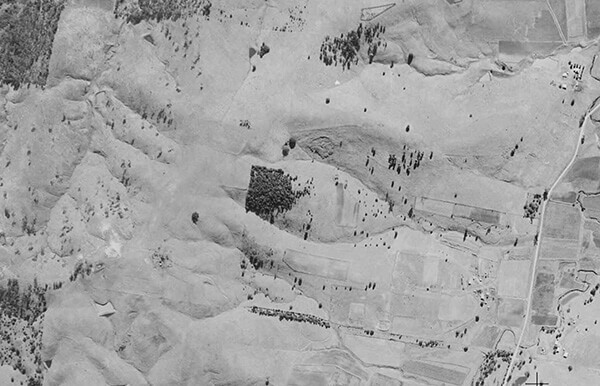
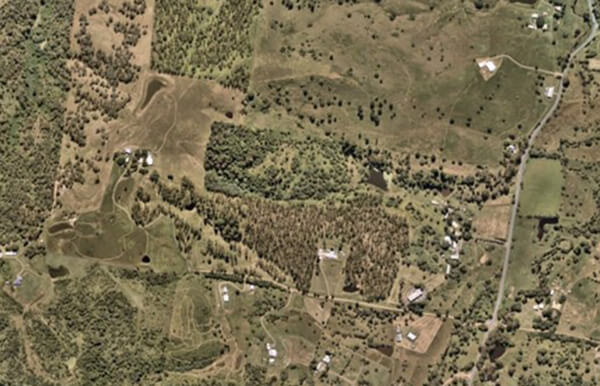
Aerial imagery from QImagery clearly shows that this vine thicket, mapped as Regional Ecosystem 12.9-10.15 was already a remnant patch back in 1951, having survived the broadscale clearing by timber getters and German pioneers in the late 1800s. This is one of the few remaining patches of the once extensive Rosewood Scrub.
Research conducted by historian, Dr Ray Kerkhove for Jagera Daran indicates that the Rosewood Scrub could have covered 31,000 hectares and stretched from Walloon to Grandchester and then back to the Brisbane River. Prior to colonisation, the Jagara clan lived in and around the scrub, an important place for collecting berries and fruit. Over 50 species of native plant were eaten and over 30 species were used medicinally. Tallegalla contained important pathways, campsites, hunting grounds, waterholes and ceremonial sites for First Nations People.
Rosewood Scrub is a type of SEVT, characterised by slow growing softwood trees, and a plethora of shrubs, vines and ground cover. Rosewood (Acacia fasciculifera) and Brigalow (Acacia harpophylla) can occur as emergents with vine thicket understorey species. Black Bean, Red Cedar, Blue Gums and even White Booyong can often be a feature along waterways, whilst Hoop Pines, Crows Ash and Shiny-leaved Stinging Trees grow in the higher terrains. What allows these unique floristic community to persist in this region is the relatively fertile, volcanic soils, access to ground water, and the evolutionary history of this vegetation community as a refugia.
Much like the Big Scrub of Northern NSW (75,000 hectares), only a fraction of the Rosewood Scrub remains, with most patches in small fragments (<5ha), precariously hugging roadsides, and on private properties. The largest protected patch of SEVT in this region is in Sterling Road Reserve in Rosewood.
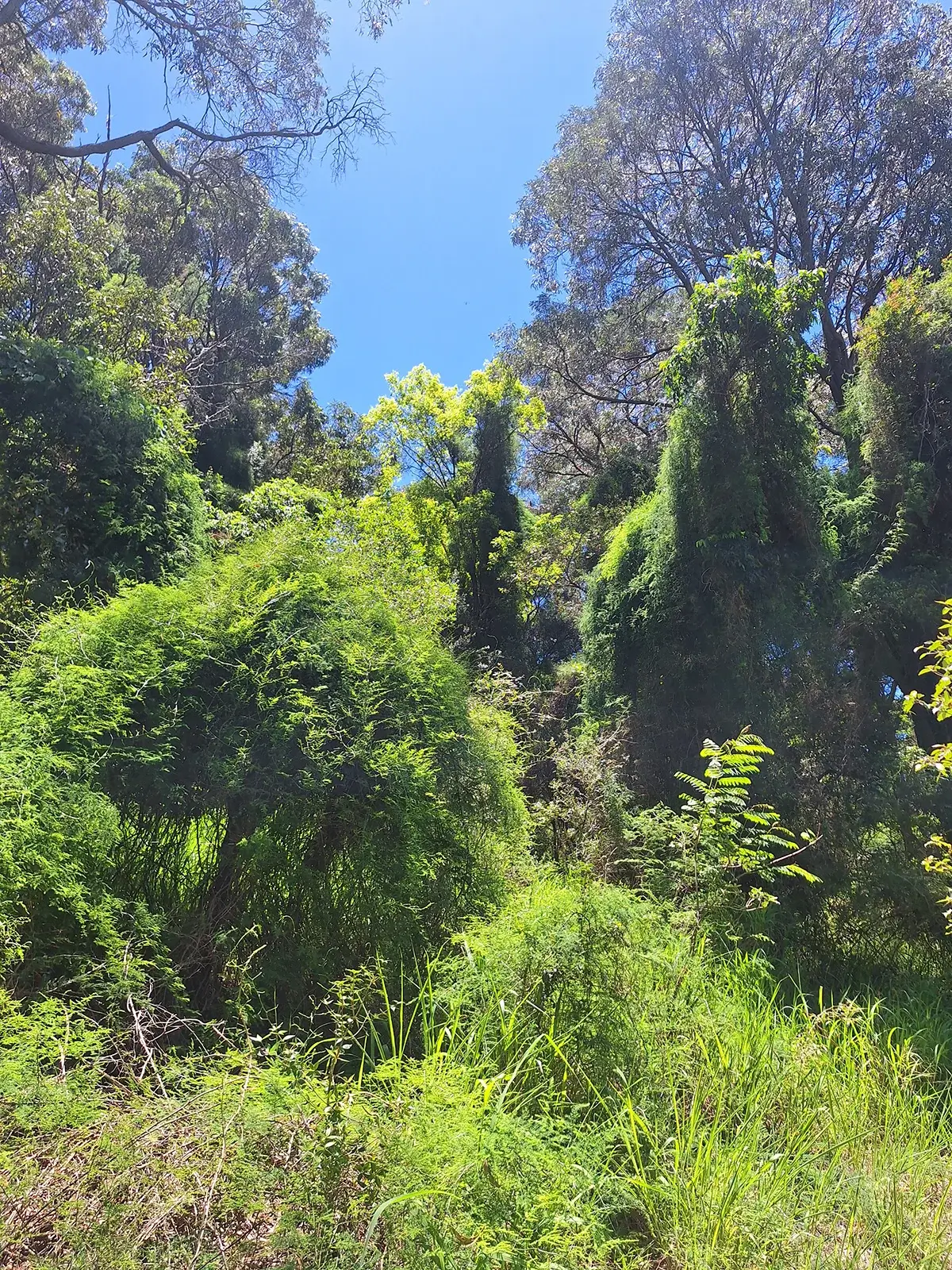
The plants of the Rosewood Scrub are slow-growing and fire sensitive. Several Land for Wildlife members in the Tallegalla area, including Martin and Chris, are gradually protecting and restoring patches of the Rosewood Scrub. Given the small patch size of the remaining scrubs and fertile soils, invasive weeds like Madeira Vine, Cat’s Claw Creeper and Climbing Asparagus pose massive challenges.
Work by the renowned naturalist, Arnold Rieck, indicated that the Rosewood Scrub was extremely biodiverse, containing between 300-400 species of plants. Arnold Rieck’s work can be seen at the Rosewood Scrub Arboretum at Peace Park, established back in 1994 with Native Plants Queensland and Ipswich City Council.
Martin and Chris are deeply committed to conserving this vine thicket through strategic weed management of lantana, Climbing Asparagus and have almost completely controlled the small section of Madeira Vine. They’ve planted vine thicket species along existing gullies to connect corridors throughout their property. They engage a local bush regenerator on a regular basis, and their collective hard work is starting to pay off.
Article and photos by Ko Oishi
Land for Wildlife Officer
Ipswich City Council