
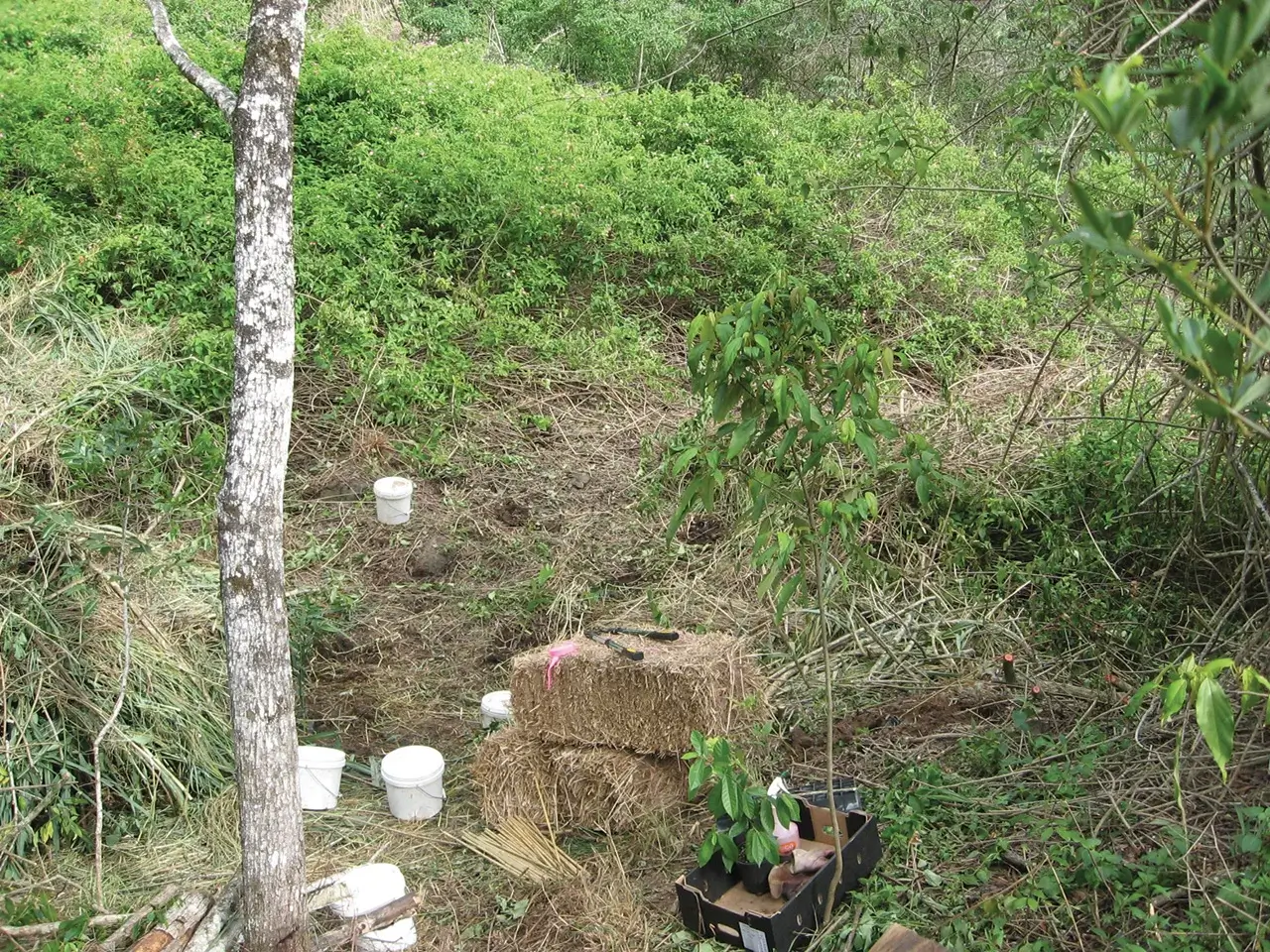
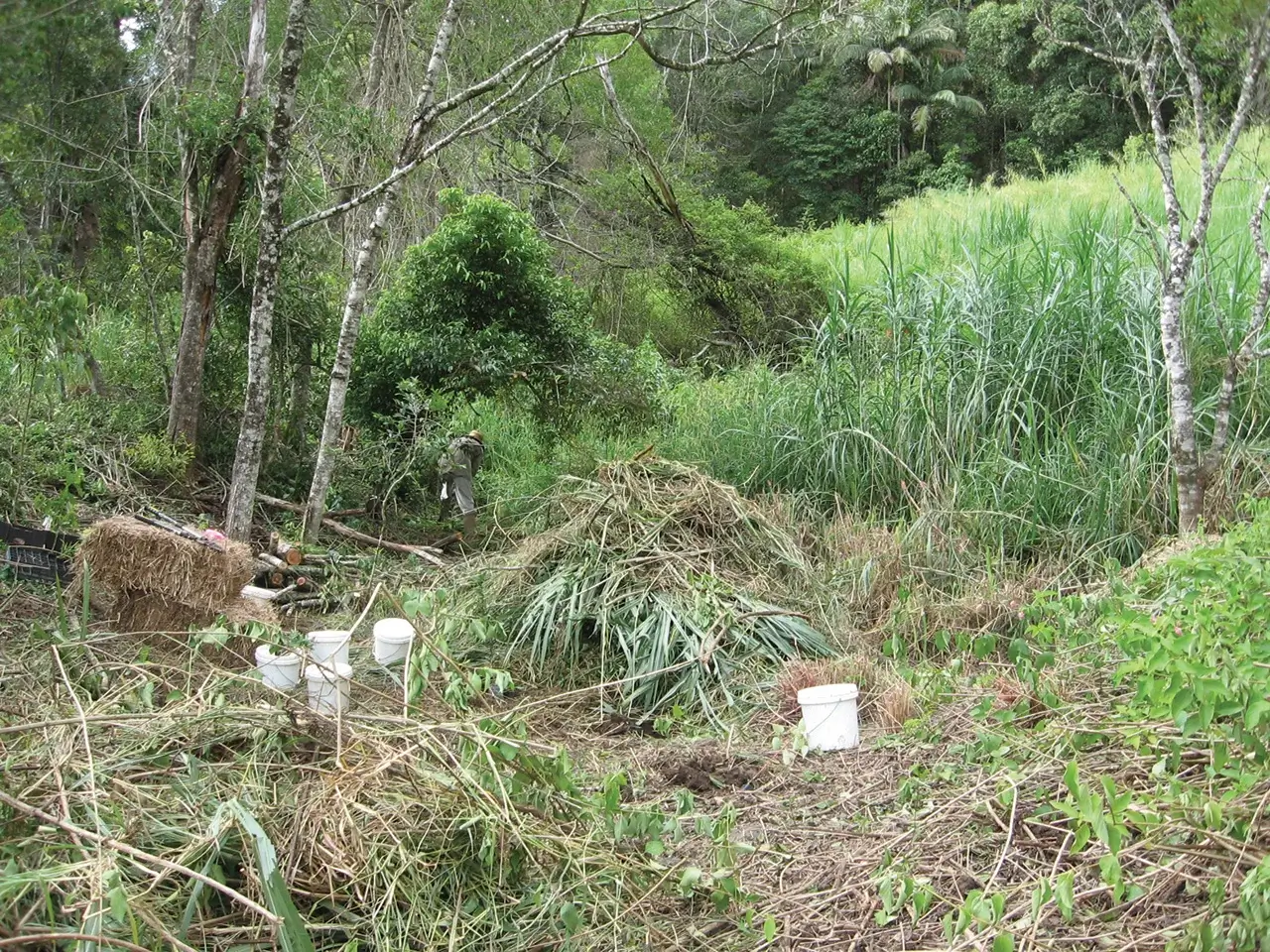
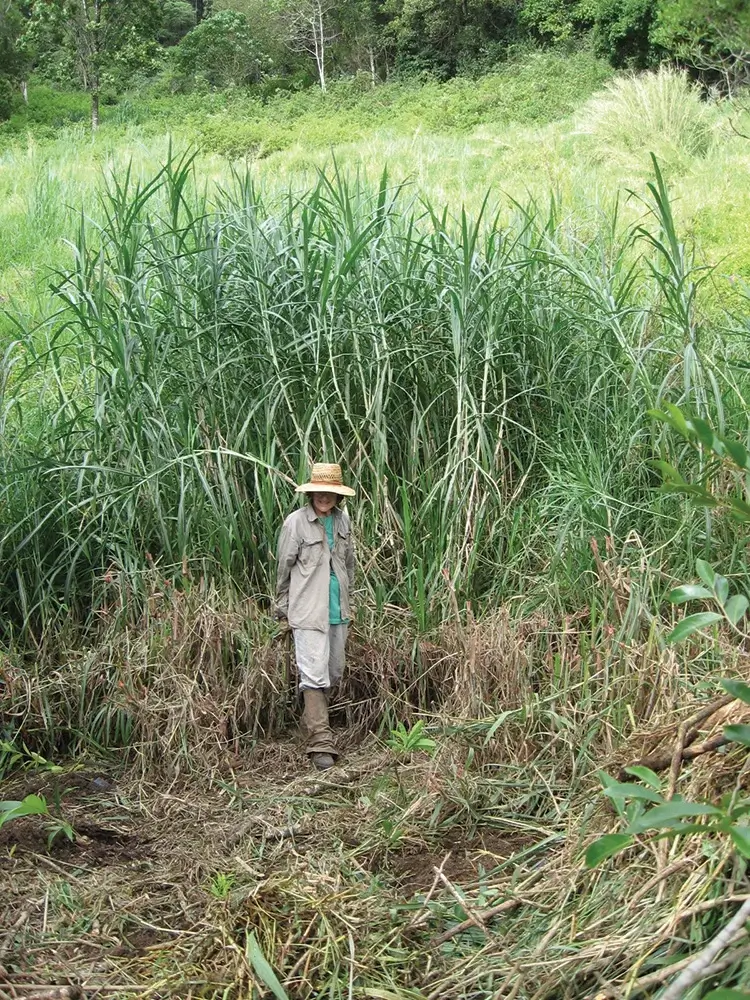
In 2014 we received a small grant to start a major project – to clear and revegetate acres of Barner or Elephant Grass (Pennisetum purpureum) and Lantana on steep, rugged terrain. The area was highly degraded due to historic agricultural pursuits and showed signs of landslip and slumping.
Due to the size of the area and degree of difficulty we realised the project would take about four or five years. It would have been insanity and environmentally unsound to try and complete the project in one or two years.
It was not long before we realised that ten litre buckets of water would be insufficient to plant thousands of trees.
Our neighbour kindly allowed us to extract water from his spring fed dam. Our love affair with polypipe began and our dreams of rehabilitating such a degraded area could be fulfilled.
We bought two rolls of 1.1/2 inch (38mm) pipe and one roll of 2 inch (50mm) pipe. In total, that was 400 metres of polypipe plus numerous connectors, t-junctions, a fire fighter pump as well as over 150 metres of 18mm hose.
As a result of laying the pipe and hoses we were able to revegetate acres of steep, rugged and gully strewn land. We were also able to establish our nursery to feed the insatiable hunger of the revegetation beast.
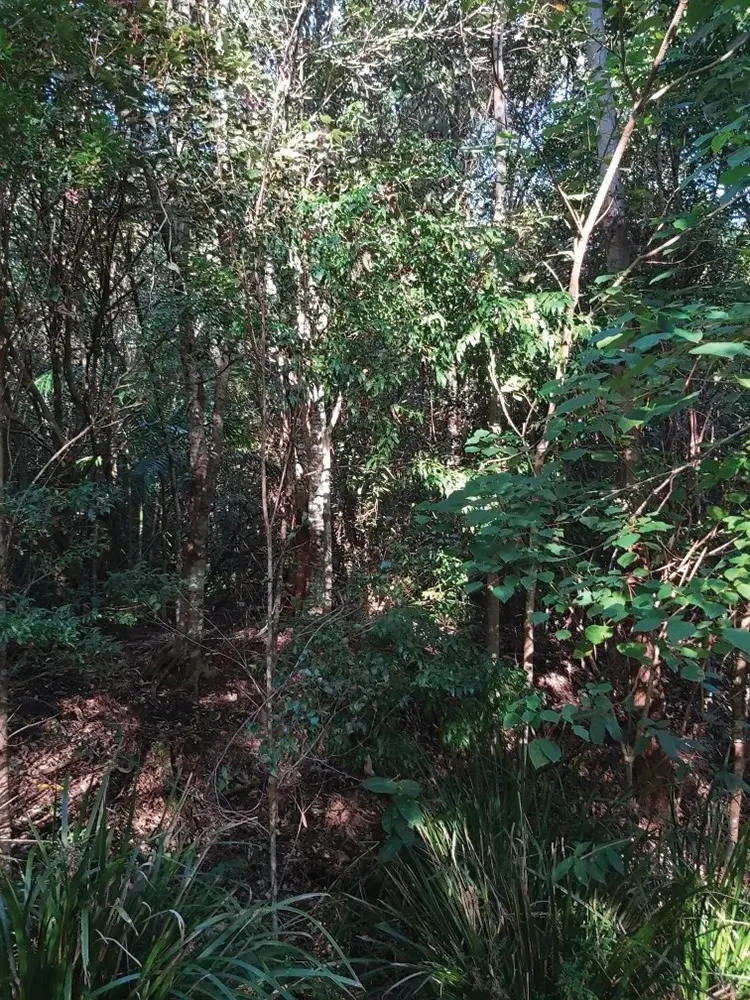
By 2025, our dream of clearing and revegetating our project area had been completed with some 7000 trees planted. The project saw a degraded weed choked area turned into a new forest with canopy cover and little weed. In addition, the new forest spawned natural regeneration amongst the self-generated thick mulch. Wildlife returned to complete the cycle.
After eleven years it was now time to reassess our priorities. The days of large plantings were completed five years ago. The pipe and hose infrastructure was no longer needed.
The time had come to pull up our pipes and hoses and move on.
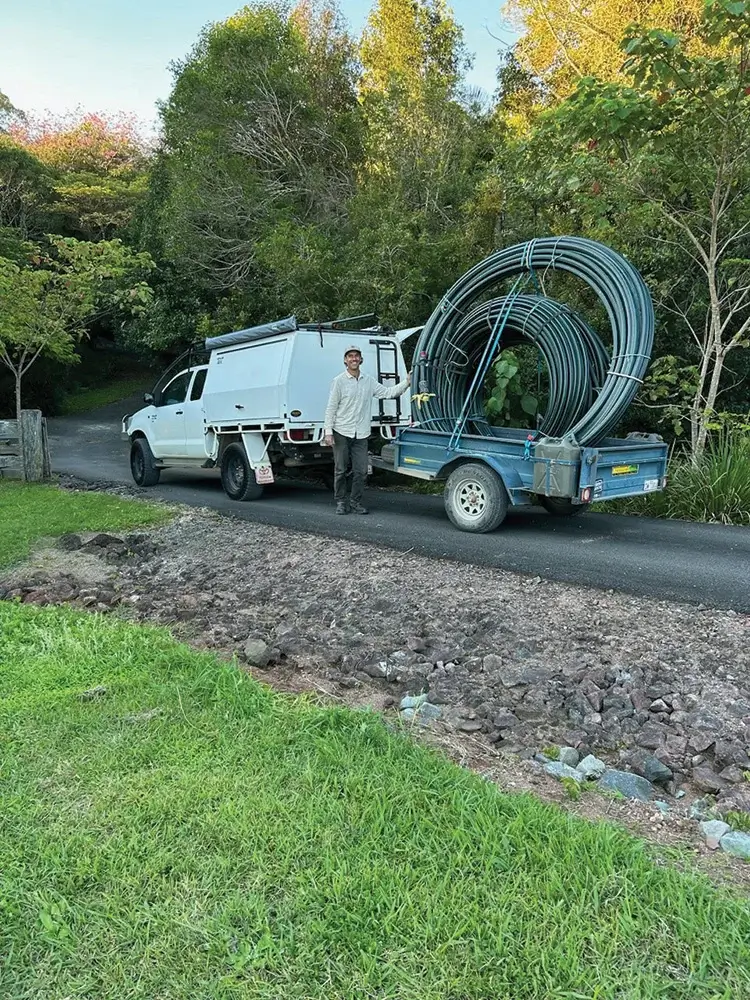
Easier said than done! Sections of pipe had been covered in soil and tree roots had grown over the top of the pipe. Some hose had been buried by a landslip. We then had to drag the recovered pipe back onto our front paddock to be rolled up ready for collection and transfer to its new home. This is no mean feat.
But, and a very big but, in the process of removing the pipe, hose and pump we felt a great deal of nostalgia and sadness. This was tempered with the joy and delight of seeing what the infrastructure had achieved – an end to a successful pipe dream.
Removing the infrastructure brought back memories. How did we ever do this? How did we get the pipe up there? Unrolling 150m of pipe is confronting on flat ground – let alone negotiating steep slopes and gullies. We must have been younger and stronger.
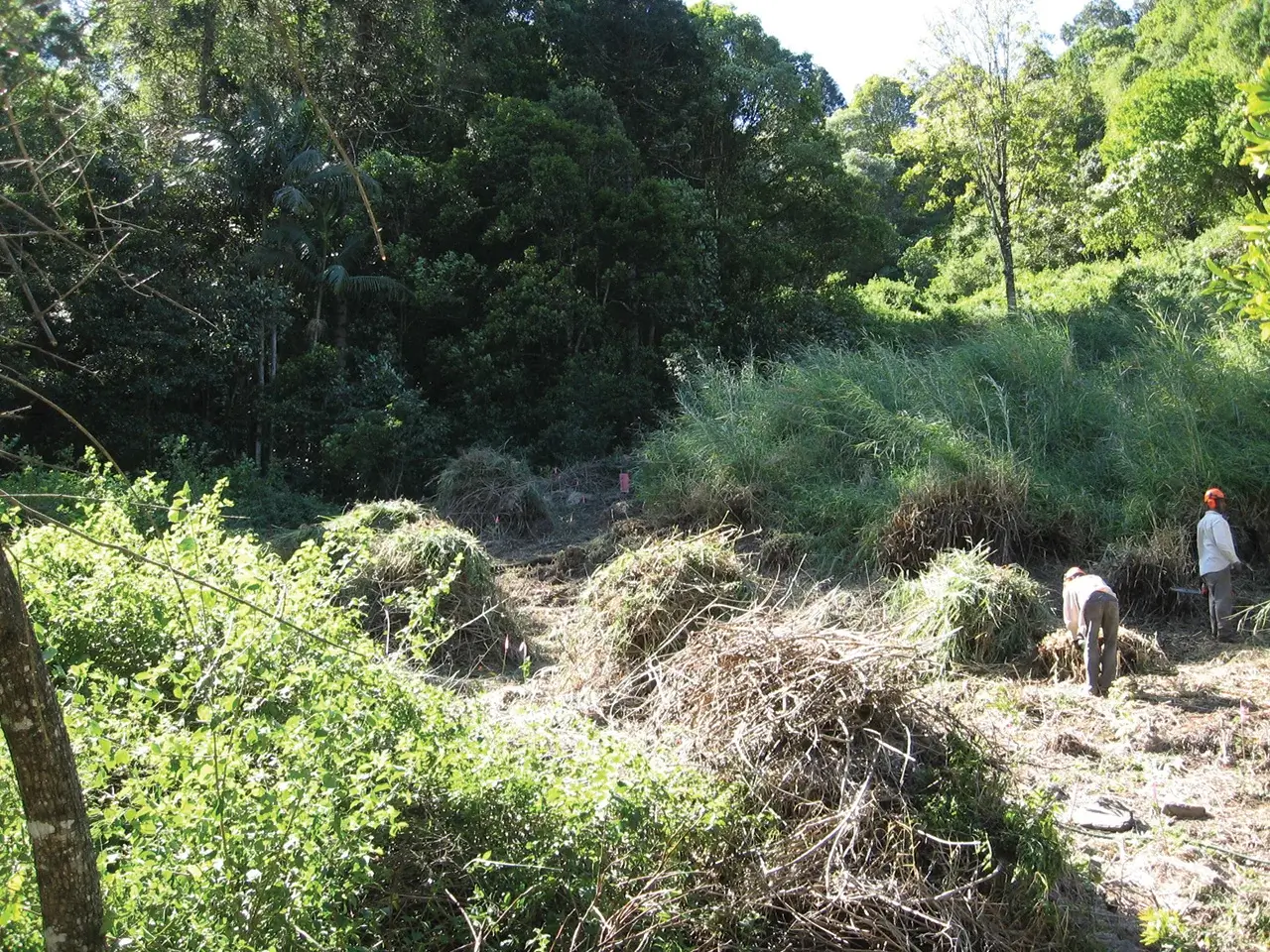
Remembering how we used the pipes and hoses to water planted tubestock, we also remember the magnificent bush regeneration contractors who cleared the Barner Grass and Lantana. We have very fond memories of Jolyon Froude and the late and greatly missed Jon Edgar. In addition, we remember the huge piles of pulled Lantana and Barner Grass which have since disintegrated. Not so friendly memories are the countless hours weeding emergent weeds and reshooting Lantana and Barner Grass in the heat and humidity. Without our watering system the project would never have been completed.
The pipe dream has ended but the memories remain, and the degraded landscape is now a young forest with little or no weeds. Natural regeneration has replaced revegetation.
And the hundreds of metres of pipe, connectors and pump? They have gone to a good home – a landholder at the beginning of his own revegetation journey and his own pipe dreams. And how appropriate is it that the landholder was one of the contractors that helped us clear the project area.
Article by Ian Webster and Dianne Lanskey
Land for Wildlife members
Flaxton, Sunshine Coast
Congratulations Ian and Dianne, a job well done. it looks amazing. What now?????