Ceris and Mark Ash have been members with our Gold Coast Land for Wildlife program since 2003 and have protected their high-altitude property at Springbrook through a conservation covenant in partnership with City of Gold Coast. The vegetation mainly consists of remnant ancient upland subtropical rainforest, along with regrowth of warm temperate rainforest and an area of peat swamp rainforest adjacent to a spring fed creek. A plethora of wildlife inhabit the property. A professional fauna survey from the summer of 2022-23 detailed an impressive diversity of animals, but more discoveries were to come.
Through the City of Gold Coast Land for Wildlife program, we loan wildlife monitoring cameras to our members and feed this data into our City’s Flora and Fauna database and into iNaturalist. I’ve had a camera focused on a small wildlife pond that Ceris set up and maintains just inside the edge of the rainforest. The camera has been there for most of the last 6 years and has captured approximately 110,000 images encompassing a stunning array of birds, mammals and reptiles. It is a fair task to go through those images and identify what is coming and going, but it is fun!
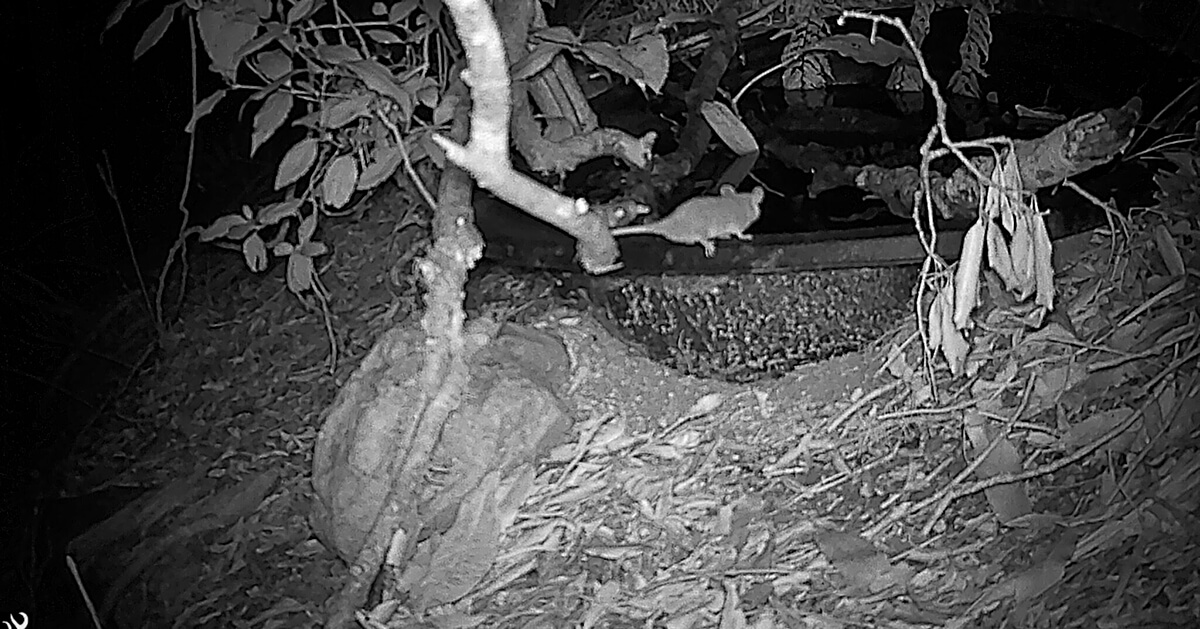
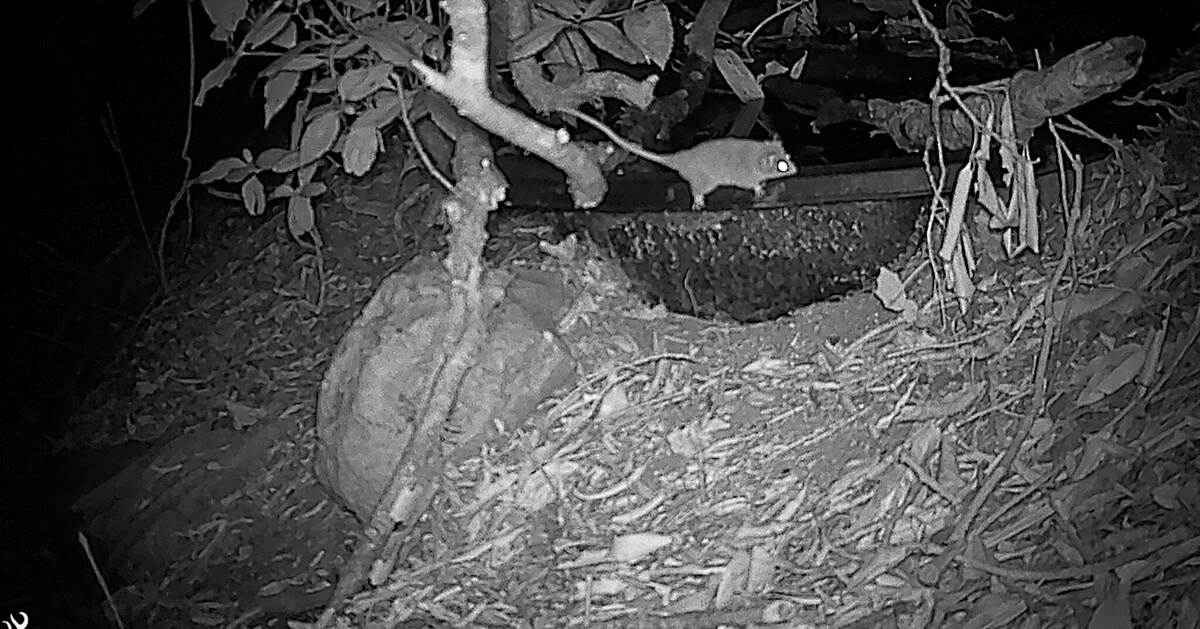
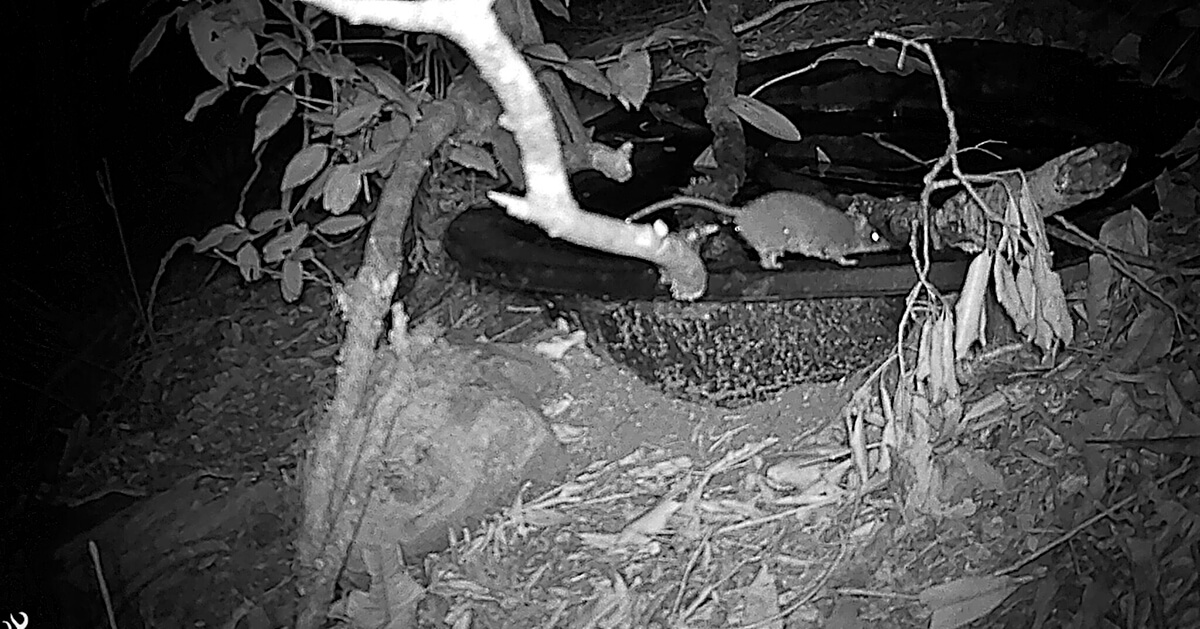
In mid-October 2025, I visited to recharge the monitoring camera, which had been out for 5 months and accrued 11,000 images, capturing 27 bird, 11 mammal and 2 reptile species. While going through the images, an infrared night shot caught my attention. I knew we had something special when, through a series of images, I noticed that the mammal’s tail was tightened around a branch that was sticking out of the pond. The prehensile tail, combined with the body size, head shape and large ears, meant this had to be an Eastern Pygmy Possum!
I quickly messaged Ceris to let her know the exciting news, it was a wow moment for both of us. A further look revealed that an Eastern Pygmy Possum visited the pond a total of 19 times from mid-September through to early October. This coincided with a very dry period, suggesting the pond became an important water source for this species during that time.
This is only the second known record of an Eastern Pygmy Possum on a Land for Wildlife property in South East Queensland, the other being the O’Reilly’s Rainforest Retreat in Scenic Rim Regional Council. All the limited observations of Eastern Pygmy Possum in Queensland come from around Springbrook and Lamington National Park areas.
Eastern Pygmy Possums are small arboreal possums that feed predominantly on nectar and pollen but also regularly eat insects. With their prehensile tail, they are an agile climber. During winter when food resources are lower, they can go into a torpor to conserve energy, their internal temperature matching the surrounding environment. They only live to four years old in the wild.
This exciting discovery is one of the rewards for the land stewardship that Ceris and Mark have provided to their property in partnership with the Conservation Partnerships team at the City of Gold Coast. It also demonstrated the benefits of long-term monitoring and having a keen eye while sorting through thousands of camera images, as cryptic species like the Eastern Pygmy Possum don’t reveal themselves easily.
Photo at top:The elusive Eastern Pygmy Possum.
Photo by Brett Vercoe (@brettvercoe), iNaturalist.
Until these discoveries by Todd, there were only 19 public records of Eastern Pygmy Possum in Queensland including six from the Queensland Museum, eight records on WildNet, three records on Atlas of Living Australia BioCollect and two on iNaturalist.
You can see Todd’s fauna camera images through the iNaturalist account, Conservation Partnerships Team City of Gold Coast (iNaturalist @cpp).
Land for Wildlife Officer
City of Gold Coast