
Take a moment to ponder the following question. When was the last time you saw a young freshwater turtle in the wild? I would be unsurprised if you struggled to find an example.
Given that we see adult turtles regularly, we don’t consider that there might be a crisis at play. As pressures have increased on our turtles over recent decades, many of these individuals have started entering their retirement years without being able to secure a new generation to follow them. The freshwater turtles of SEQ are considered an ‘ageing demographic’, as most individuals will live up to 40 years, but there are currently few juveniles and low recruitment rates to replace them.
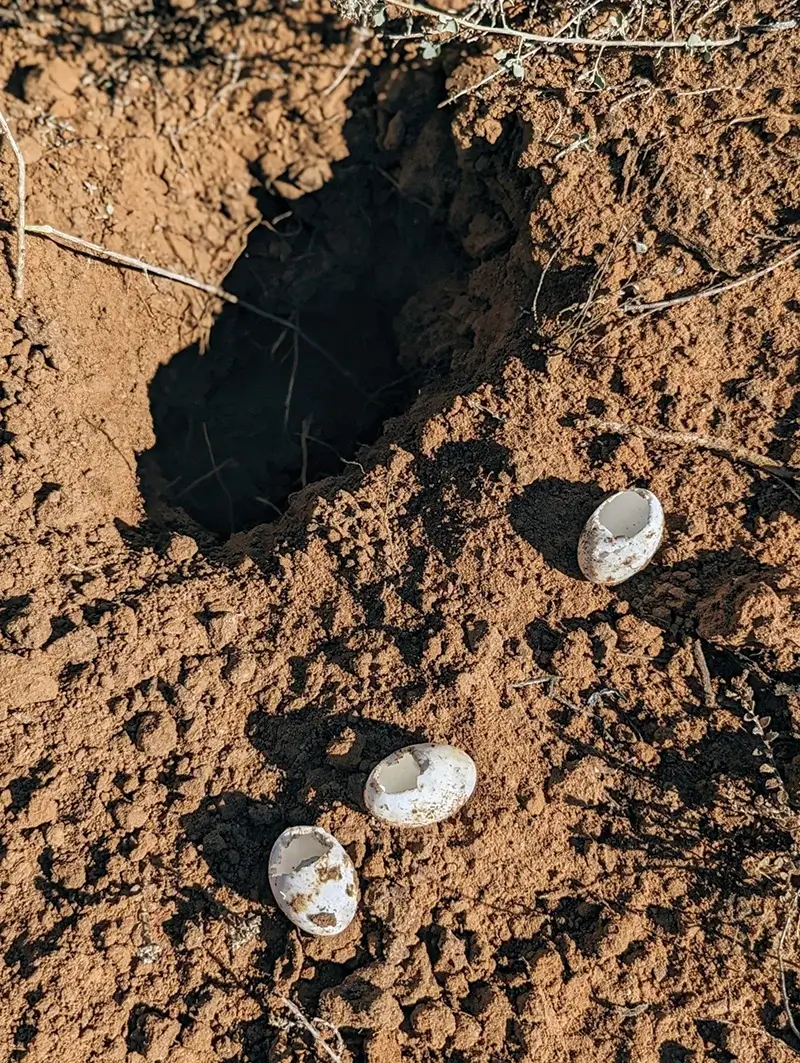
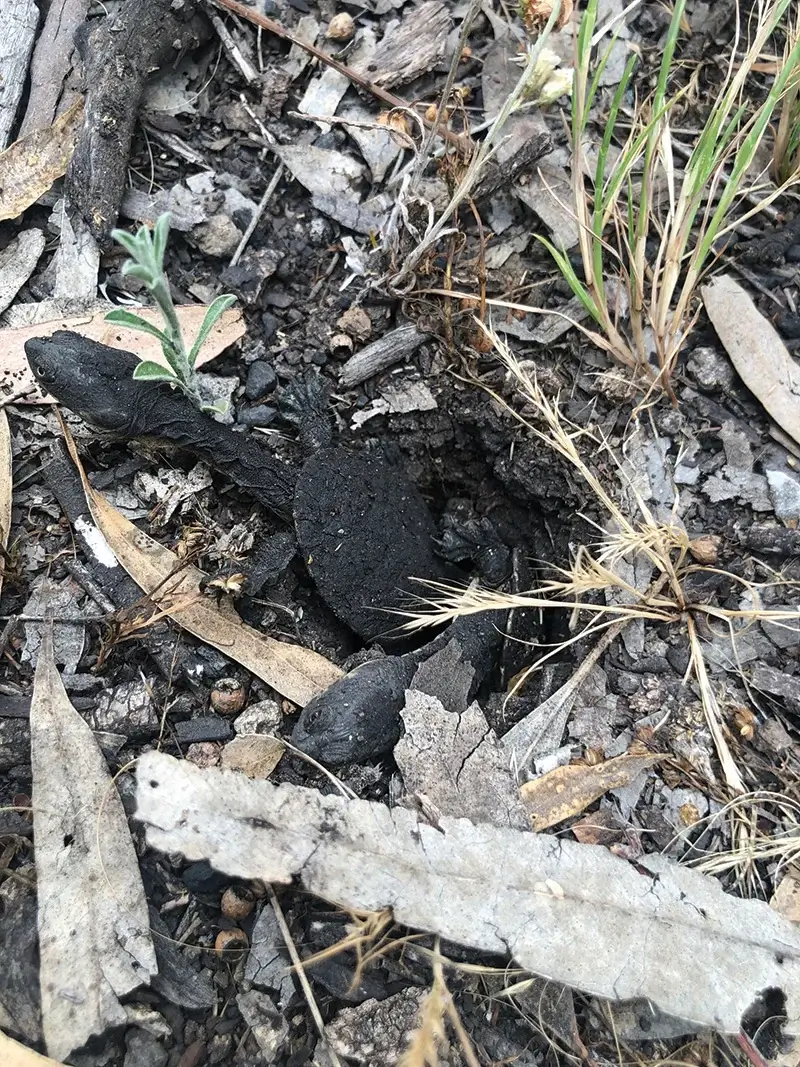
While nest predation is a natural part of their ecosystem balance, nest threats have historically only been Monitor Lizards (Varanus spp.), the Echidna (Tachyglossus spp.), and Dingo (Canis familiaris). Red Foxes (Vulpes vulpes), and Feral Pigs (Sus scrofa), are also skilled at digging up turtle nests to eat turtle eggs, and since their arrival to Australia have driven turtle nest predation upwards of 90%, meaning nearly all nesting sites are attacked by predators before the hatchlings emerge. This statistic doesn’t include the added pressure of nest trampling by livestock drinking at the water’s edge. In addition, most of our rivers and creeks have been altered since European colonisation resulting in higher levels of turbidity, reduced native aquatic vegetation, and removal of waterway ‘snags’. This loss of structure in waterways has increased turtle hatchling predation by fish, larger birds such as Torresian Crows (Corvus orru), and Eastern Water Dragon (Intellagama lesueurii), to name a few. All in all, it is not a great time to be a turtle hatchling.
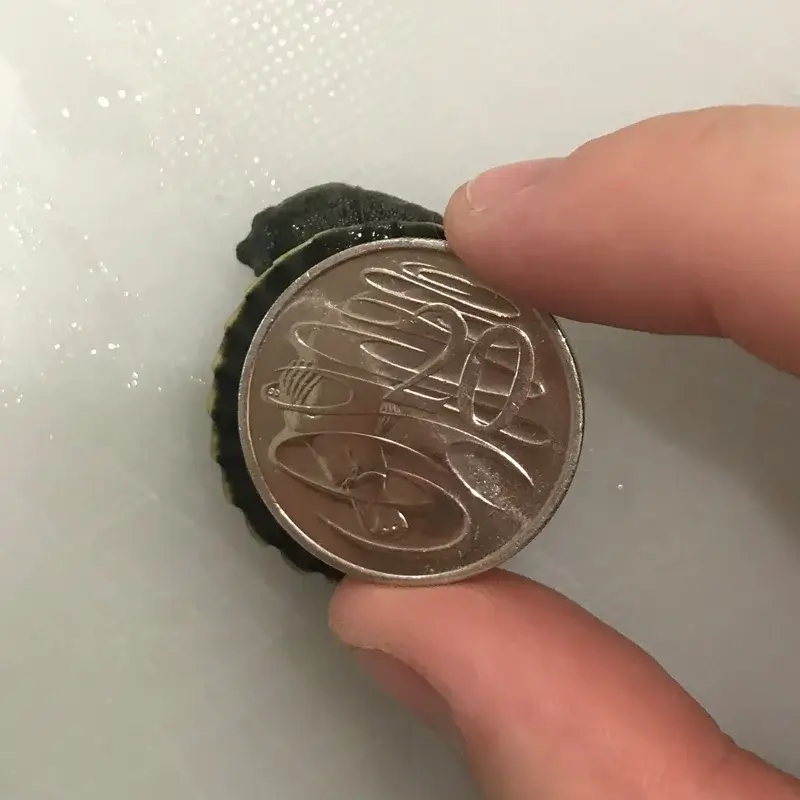
Freshwater turtles emerge from their eggs at roughly the size of a 20-cent coin, depending on the species, and weigh only a few grams. As fresh hatchlings develop their leg muscles and learn the limits of their lungs, they are restricted to the water’s edge for the first weeks of life. This is where they are most exposed to predation. Over the first year they grow rapidly, eventually making them too large for most mouths to swallow. After this they take on a more sustainable rate of growth where they grow slowly, hardening their shell and dulling their markings to blend in more with rocks and logs, rather than the algae and leaf litter they grew up in. It takes a minimum of ten years for our freshwater turtles to reach adulthood. Moreover, it takes over ten years before the luckiest baby turtles have a chance to produce their own offspring and continue a new generation.
Few long-term datasets exist for long-lived, slow-growing animals like our freshwater turtles meaning the true scale of the problem is unknown. One study in central NSW estimates that the Broad-shelled Turtle (Chelodina expansa) and Eastern Long-necked Turtle (Chelodina longicollis), both of which are found in SEQ, have faced a 69–91% decline between 1976 and 2011. That’s staggering.
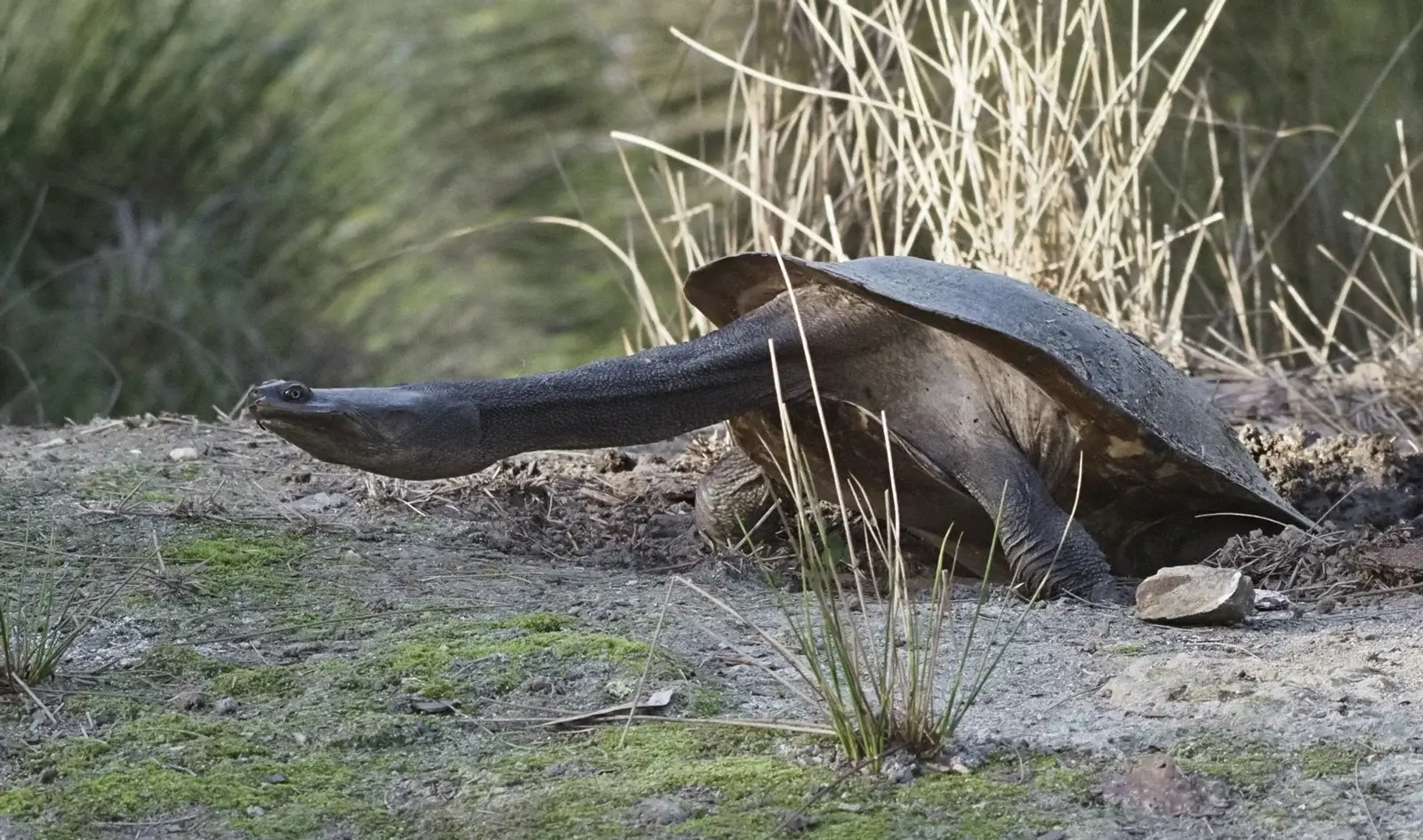
By consuming carrion and other organic material, freshwater turtles contribute to nutrient cycling and waterway ecosystem function. Affectionately nicknamed our waterway vacuum cleaners, freshwater turtles perform a crucial ecosystem service that is essential to maintaining the overall health of natural environments.
Most turtle nesting occurs in the late-spring and early-summer rains when the wet weather softens the soil and allows them to lay their eggs in the sandy substrate. Females will attempt to lay their eggs above the flood level, as the porous eggs can drown if the nest floods. The Broad-shelled Turtle will lay later in autumn between March and April, with an exceptionally long incubation period lasting almost a year. An otherwise cryptic species, it is often seen crossing roads and has been recorded travelling up to one kilometre over land in their attempt to find the perfect nesting site for their clutch. The nesting season is a unique opportunity to document and observe the wonderful turtles that we’re fortunate to have. So, the next time you see one of these creatures, be sure to photograph it and log your sighting to iNaturalist.
Image top: A Sub-adult Macquarie River Turtle (Emydura macquarii) climbs onto the bank to bask. Photo by Greg Tasney (@gregtasney), via iNaturalist.
Article by Gibson Kelly
Land for Wildlife Officer
Logan City Council
References & Further Reading
Van Dyke, J.U., Spencer, R.–J., Thompson, M.B. et al. Conservation implications of turtle declines in Australia’s Murray River system. Sci Rep 9, 1998 (2019). https://doi.org/10.1038/s41598-019-39096-3
Robinson KJ, Limpus DJ, Crosbie B, Limpus CJ, Fabbro LD. (2024) Depredation of eggs of threatened freshwater turtles by the short-beaked echidna (Tachyglossus aculeatus (Shaw, 1792)). Australian Journal of Zoology 71, ZO23029. https://doi.org/10.1071/ZO23029
Chessman BC. (2022) Introduced red foxes (Vulpes vulpes) driving Australian freshwater turtles to extinction? A critical evaluation of the evidence. Pacific Conservation Biology 28, 462–471.
https://doi.org/10.1071/PC21058